When you make purchases through links on this site, The Track Ahead may earn an affiliate commission. Also, these posts are based off my own experiences. I am not responsible for any action you take as a result of reading this. Learn More
When we wash our cars, there are some things to adhere to, to ensure you effectively wash it. There’s also the aspect of washing to ensure that you minimize the amount of scratching that occurs while you’re doing so. Finally, after you’ve washed your car, you’ll need to dry your car. There are a number of ways to dry your car, but I’ll tell you what I think is the best way to do so.
The best way to dry your car will mostly depend on whether or not your car is protected using a wax, paint sealant, or ceramic coating. If it is protected with one of these methods, blowing air from the use of something like a leaf blower will be the safest and easiest way to dry your car. You’ll probably still need a microfiber drying towel for residual water that is not blown off the car.
If your vehicle is not protected or maybe if the protection is wearing off, you will have a harder time blowing the water off your car after washing it. If you try using a blower, it will just blow the water around the surface of the car and the water won’t actually blow off of the car. In this case, you most certainly will need a microfiber drying towel to dry off your vehicle.
What Are the Different Ways to Dry Your Car?
I’m going to go through each of the most common ways to dry your car. Then after going through all of the different methods, I’ll tell you what I think is the best way to dry your car whether or not your car is protected with a wax, sealant, or coating. If you just want to get to my recommendation, you can skip down to the end.
Large Absorbent Drying Towel
I’ll start off with one of the most popular options, although it’s not a good way to dry your car in my opinion. Yes, it’s large. Yes, it’s absorbent. So then why wouldn’t it be good for drying your car? Well, if you’ve actually tried drying your car with it before, you’ll quickly realize that it only works well for the first few panels until the drying towel gets saturated with water. Then, it becomes very heavy and hard to manage in your hands, even though you’ve only maybe dried like 1/4 of your car.
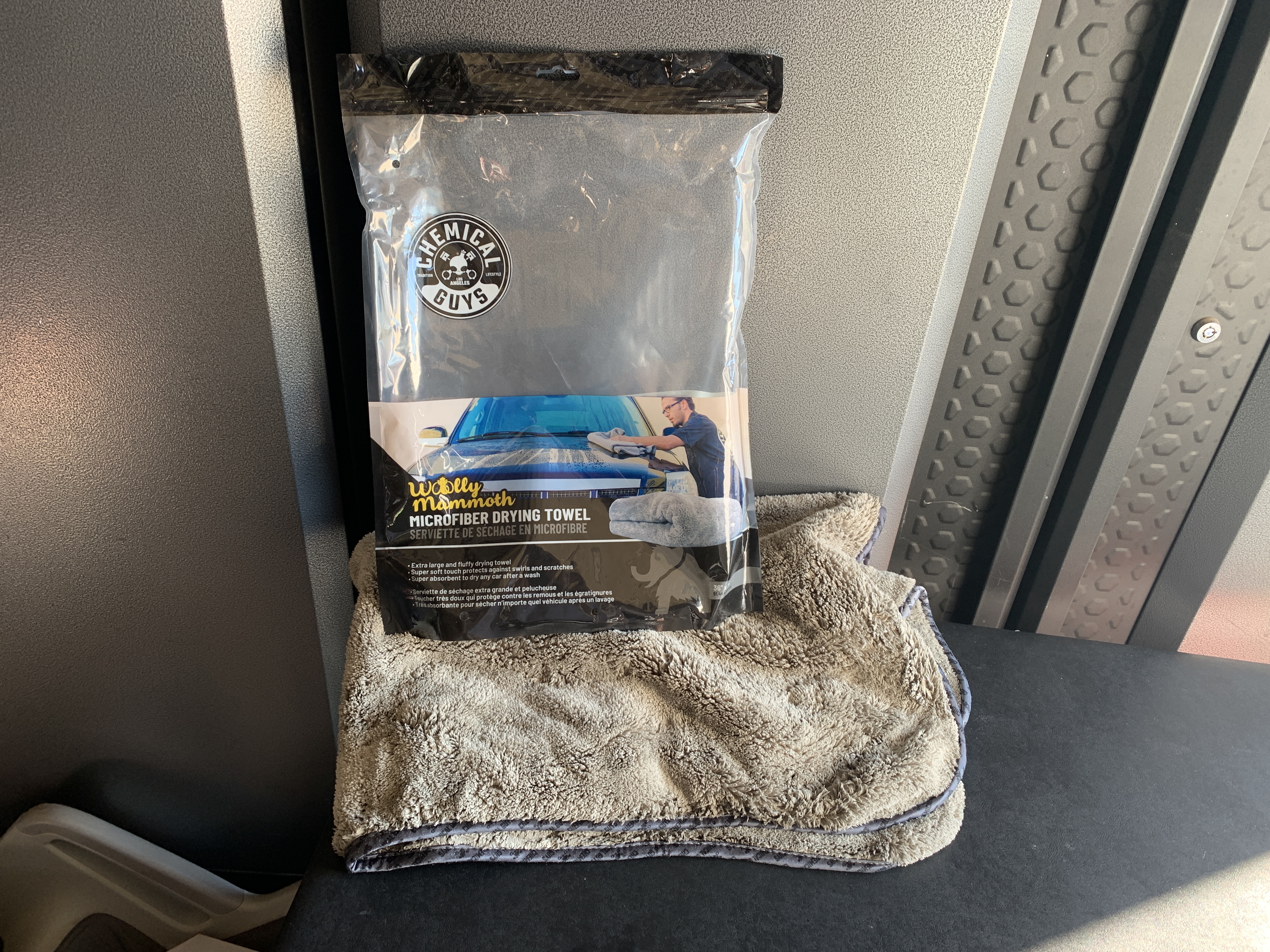
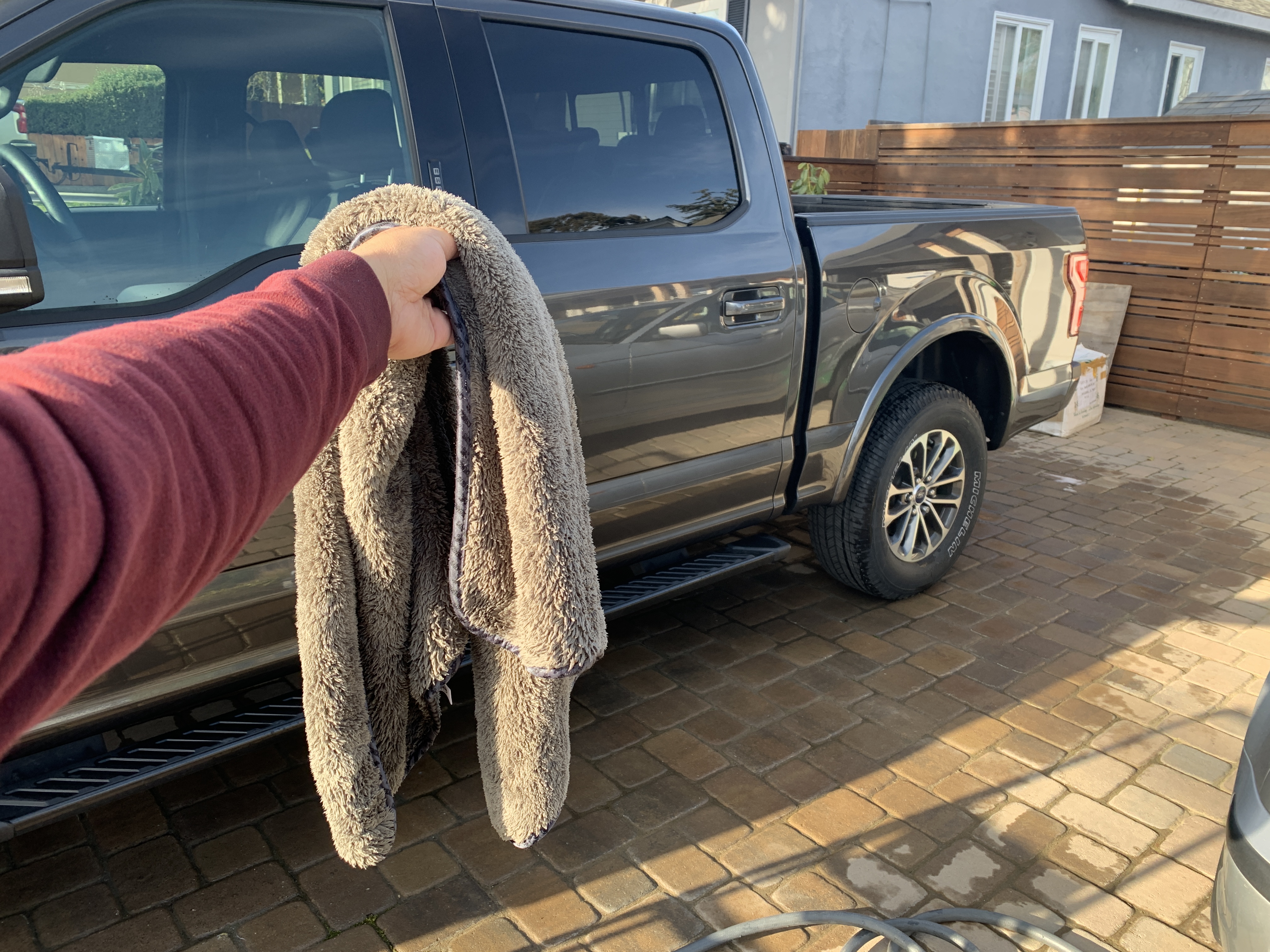
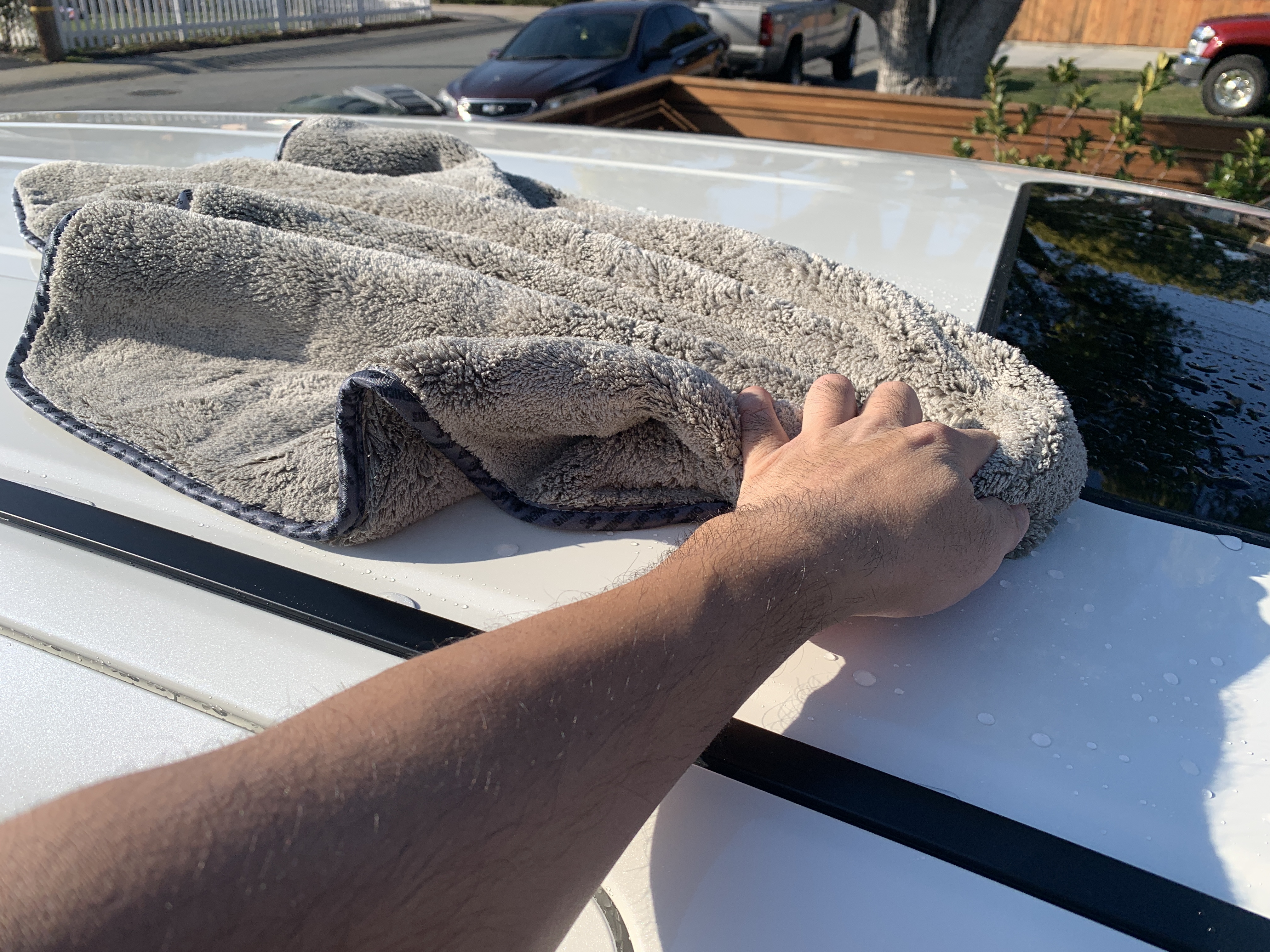
Take this Chemical Guys Woolly Mammoth for example. You start drying up your car and then once it gets fully soaked with water, then what? You could continue drying your vehicle, but it would just leave behind a bunch of water behind since the towel can’t soak up any more water. The obvious alternative is to wring out the towel. Unfortunately, wringing out such a large and thick towel such as this one is really hard to do.
You can’t quite wring it out because it’s just too big in your hands. Even if you can get somewhat of a grip around the towel, you can’t quite wring it out very well. So you still leave behind quite a bit of water inside the towel. As a result, you will subsequently soak up less water than you did the first time around. There are smaller versions of the thick, absorbant drying towel, but in my experience you still have the same problem with wringing out the water due to its thickness, not its overall size.
Waffle Weave Microfiber Drying Towel
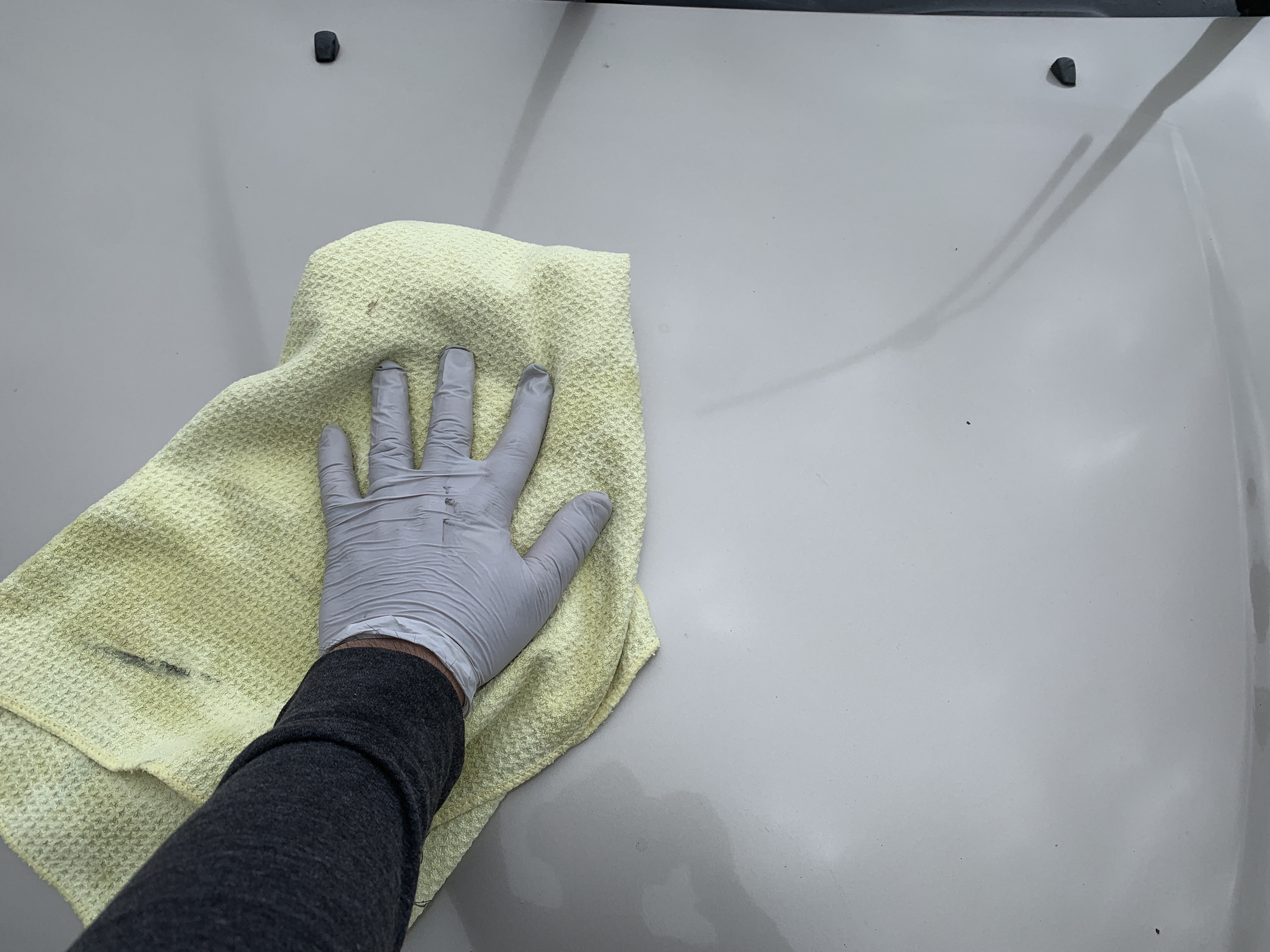
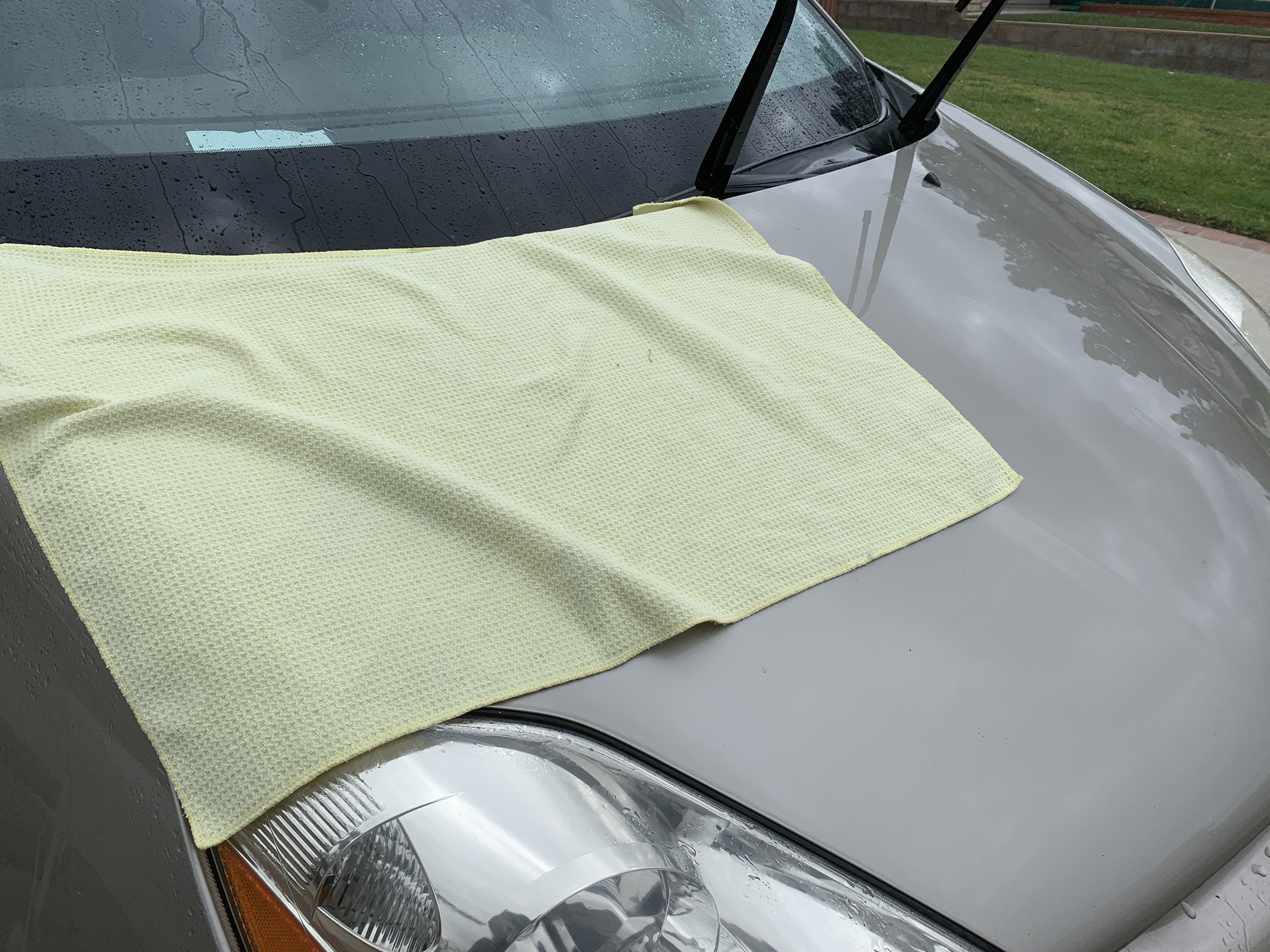
This is another type of drying towel that is not supposed to scratch your vehicle during drying. It’s a waffle weave microfiber drying towel that is designed for drying your vehicle. In my experience, this is the better of the drying towels to use. Although it doesn’t absorb as much water, it does wring out very easily so you can continue drying the car without missing a beat.
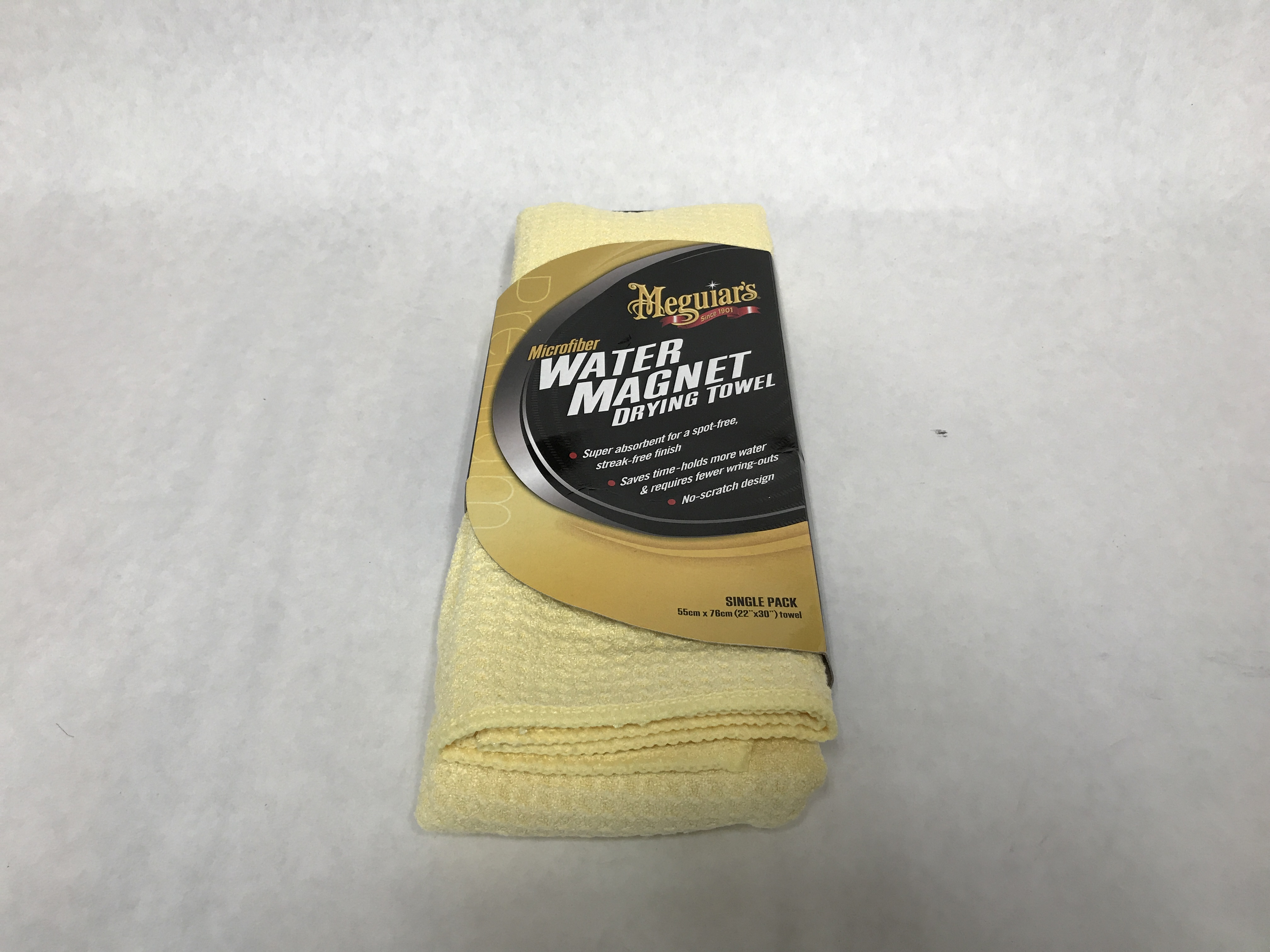
Below is the Meguiar’s Water Magnet Microfiber Drying Towel. I have a bunch of these at home and use them primarily on my vehicles. I do believe the other softer microfiber drying towels will do a little better at preventing scratches, but I’ve still been able to safely dry my car using this type of waffle weave drying towel. This drying towel is also the perfect size for wringing out water with.
Meguiar’s Water Magnet Microfiber Drying Towel
Leaf Blower
If your car is protected with a wax, paint sealant, or coating and therefore your car’s paint is hydrophobic (i.e. water beads up on your car and doesn’t “stick” to your paint), then using a leaf blower is one of the best ways to dry your car since you can just blow the water off of your car. It doesn’t matter if you’re using an electric or gas leaf blower. What does matter is the CFM (cubic feet per minute) rating, which will basically tell you how much air volume can go through the blower.
Typically if your car is protected and it is still holding up well, you can use a strong leaf blower to blow about 90-95% of the water off your car. As an added bonus, a leaf blower is extremely helpful in blowing out crevices and seams that would otherwise hide water. This water can eventually leak out slowly across your paint, leaving water marks behind. After blowing your vehicle down with the leaf blower, you can follow up with a drying microfiber towel to get the remaining 5-10% of residual water left behind.
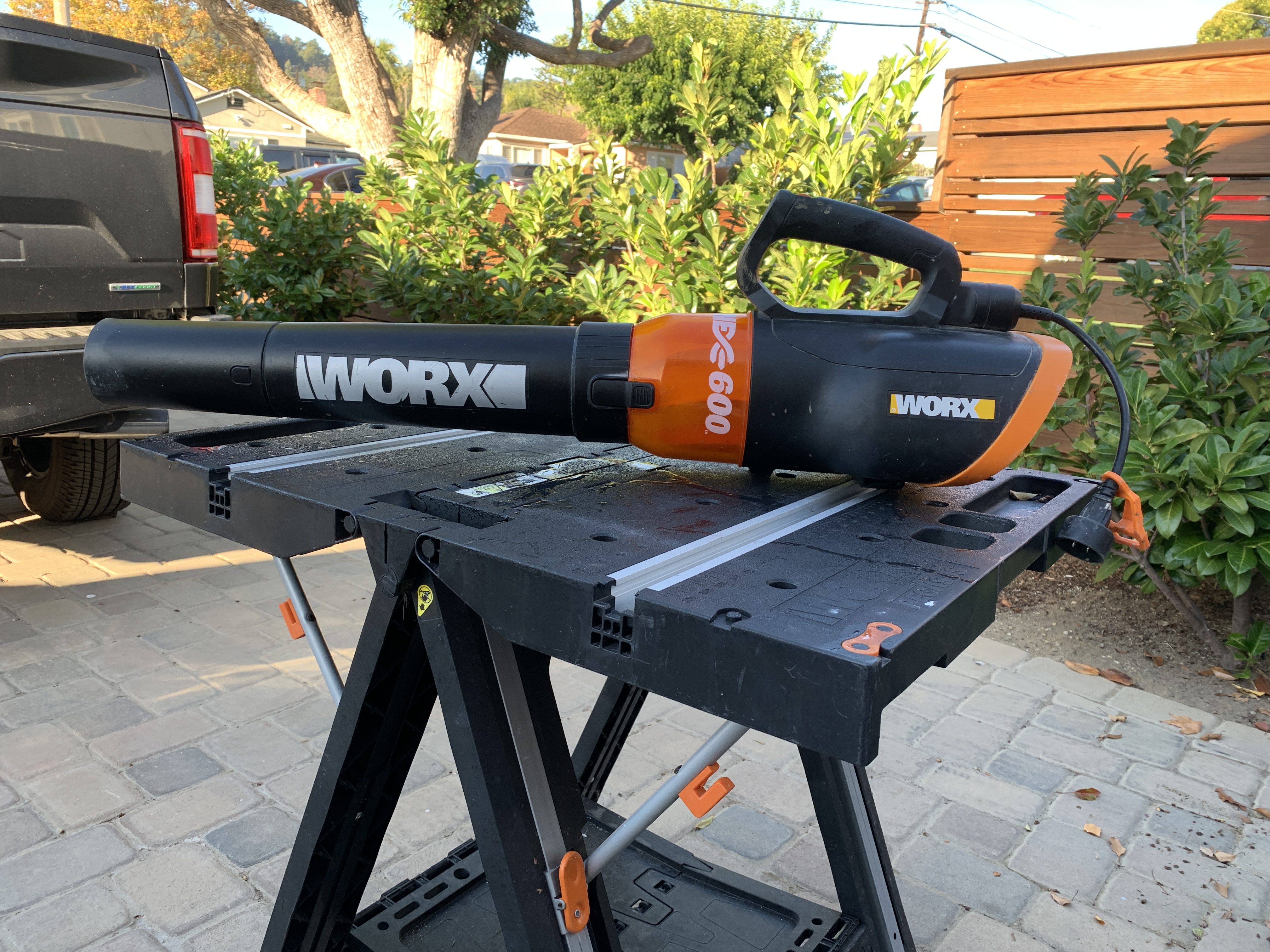
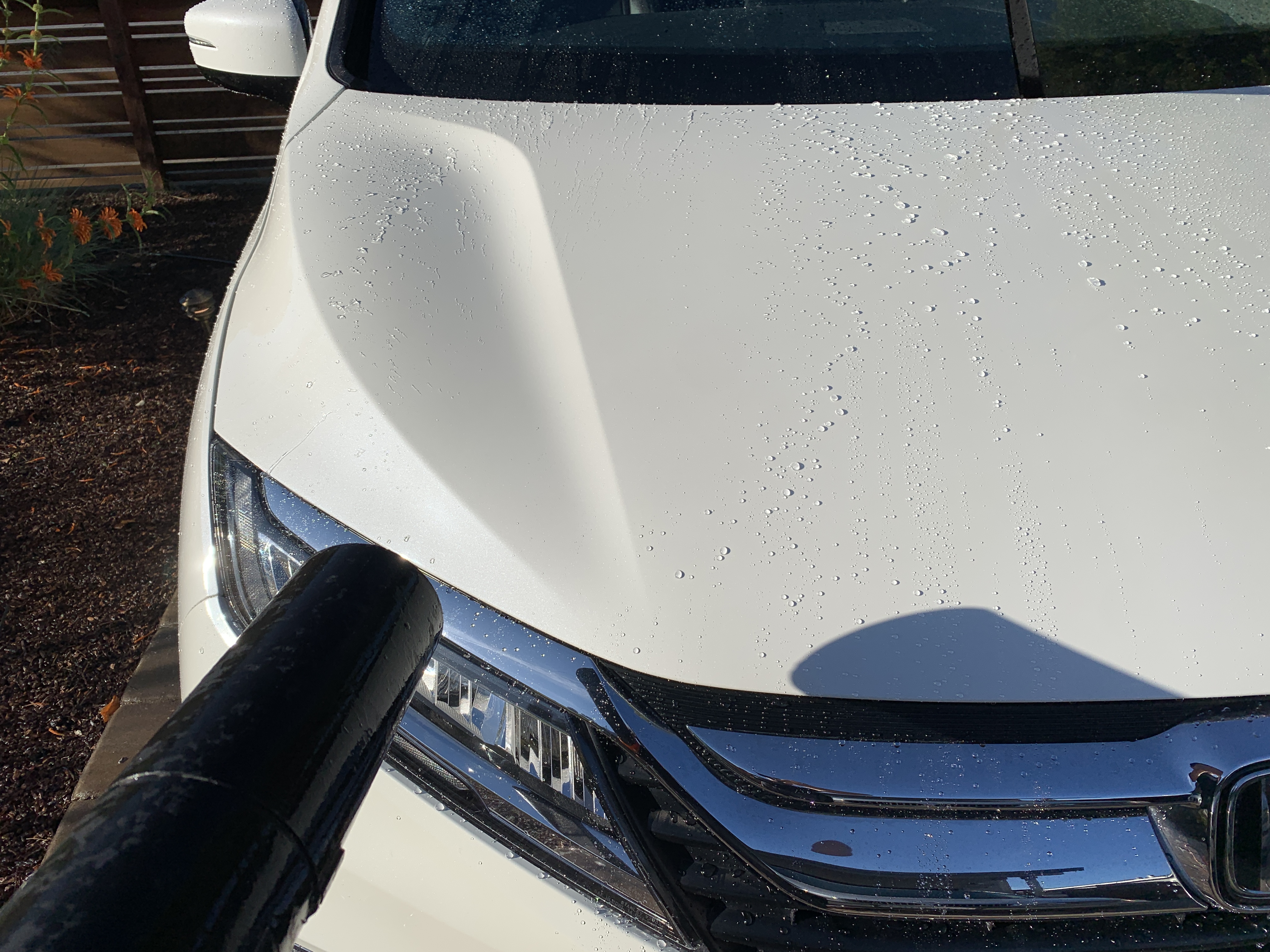
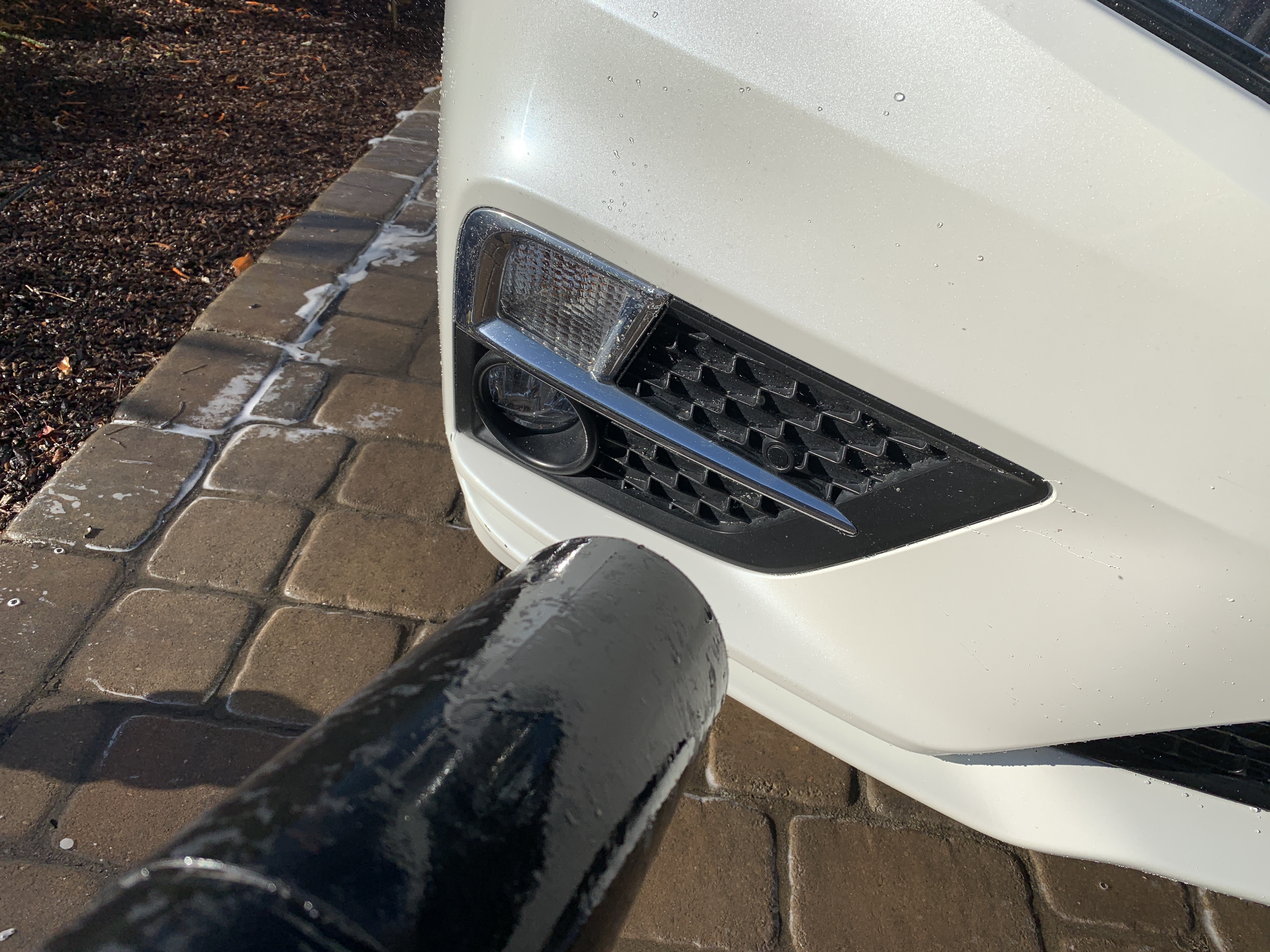
For ultimate maneuverability, opt for a leaf blower that is battery-powered, and get a short nozzle attachment to go with it. This offers extreme portability, so you don’t have to mess around with extension cords or extra long nozzles (which typically come with the leaf blower). It doesn’t get any better than this when you have a vehicle that has a wax, sealant, or coating finish on it.
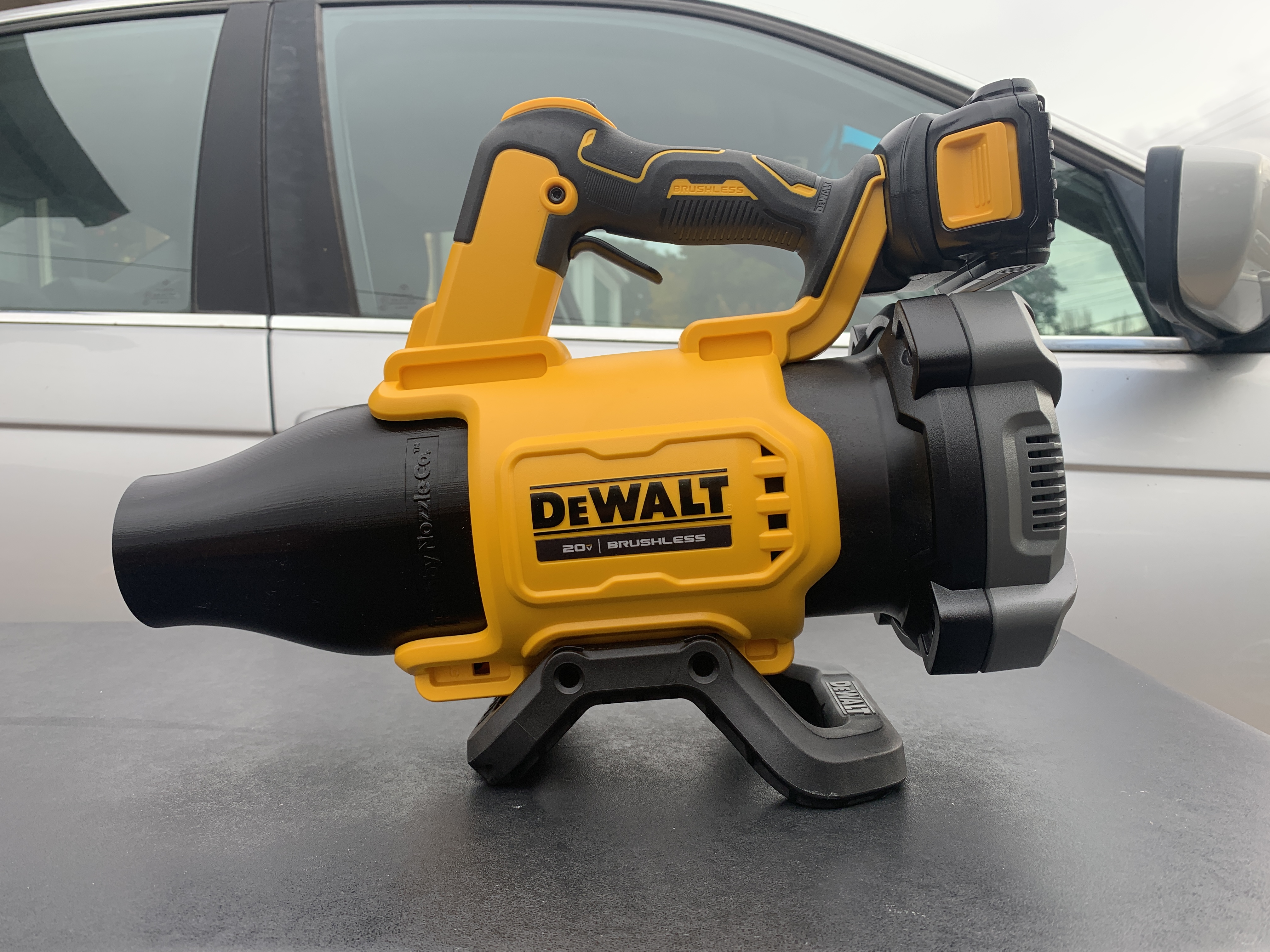
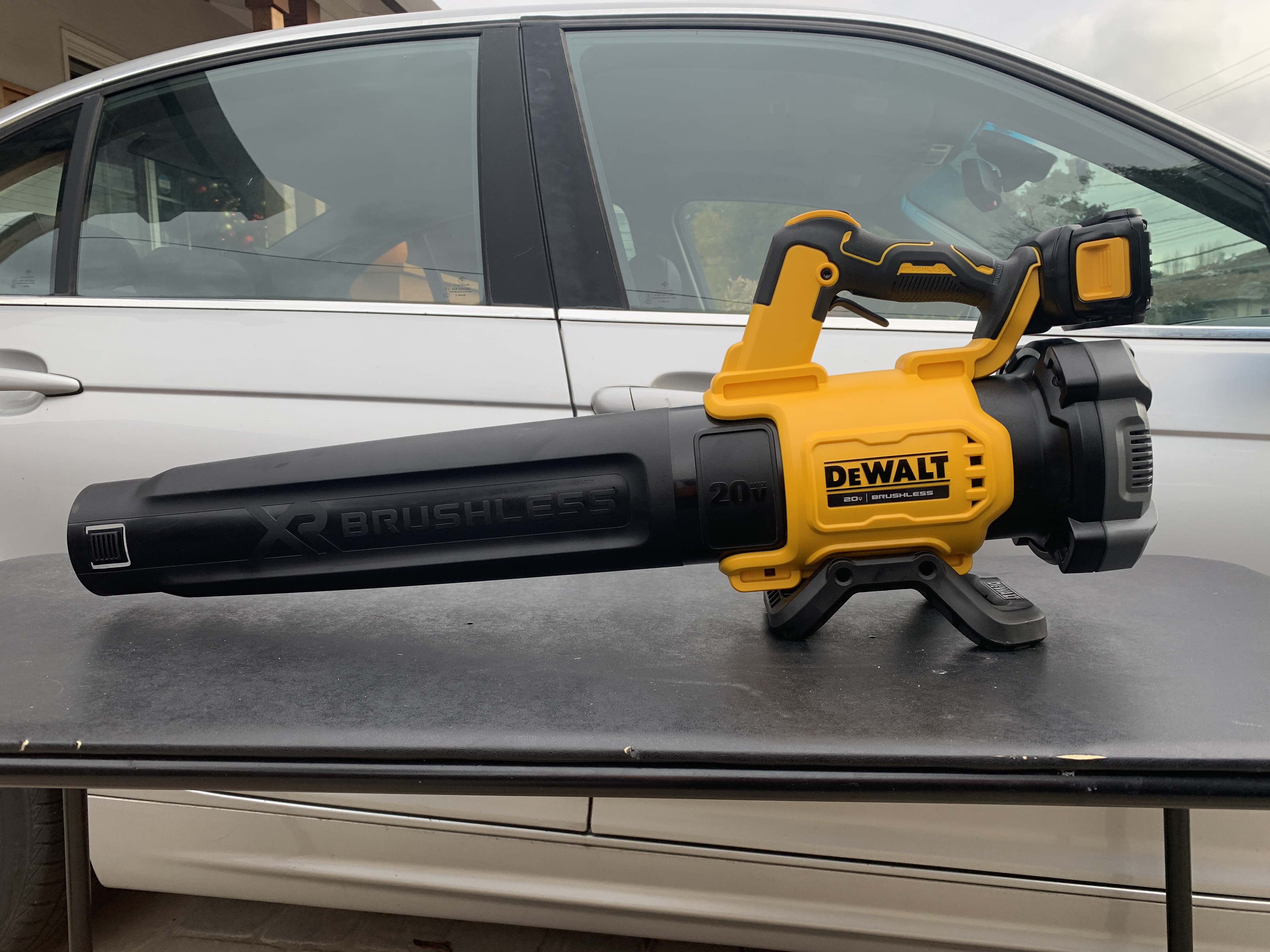
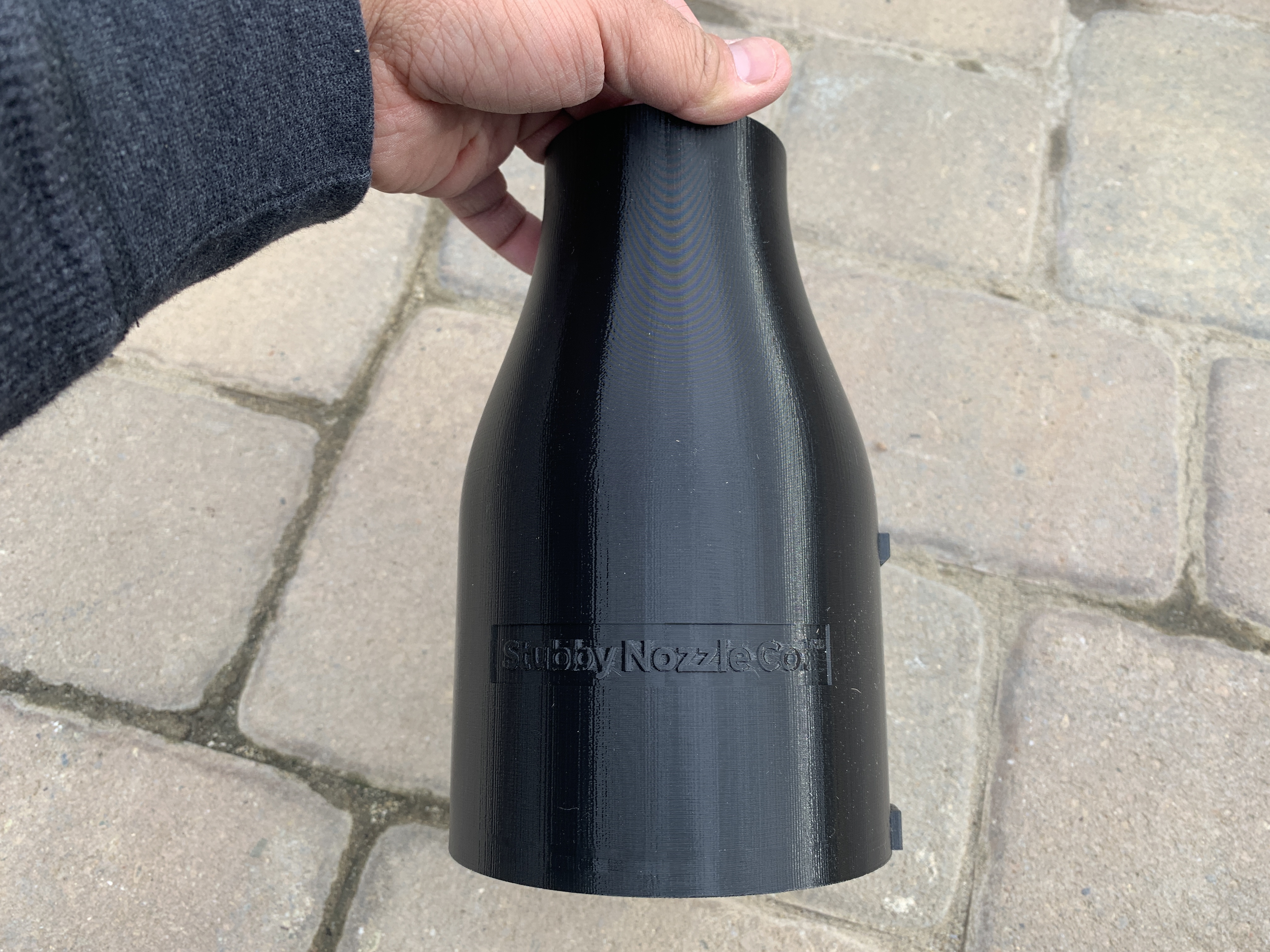
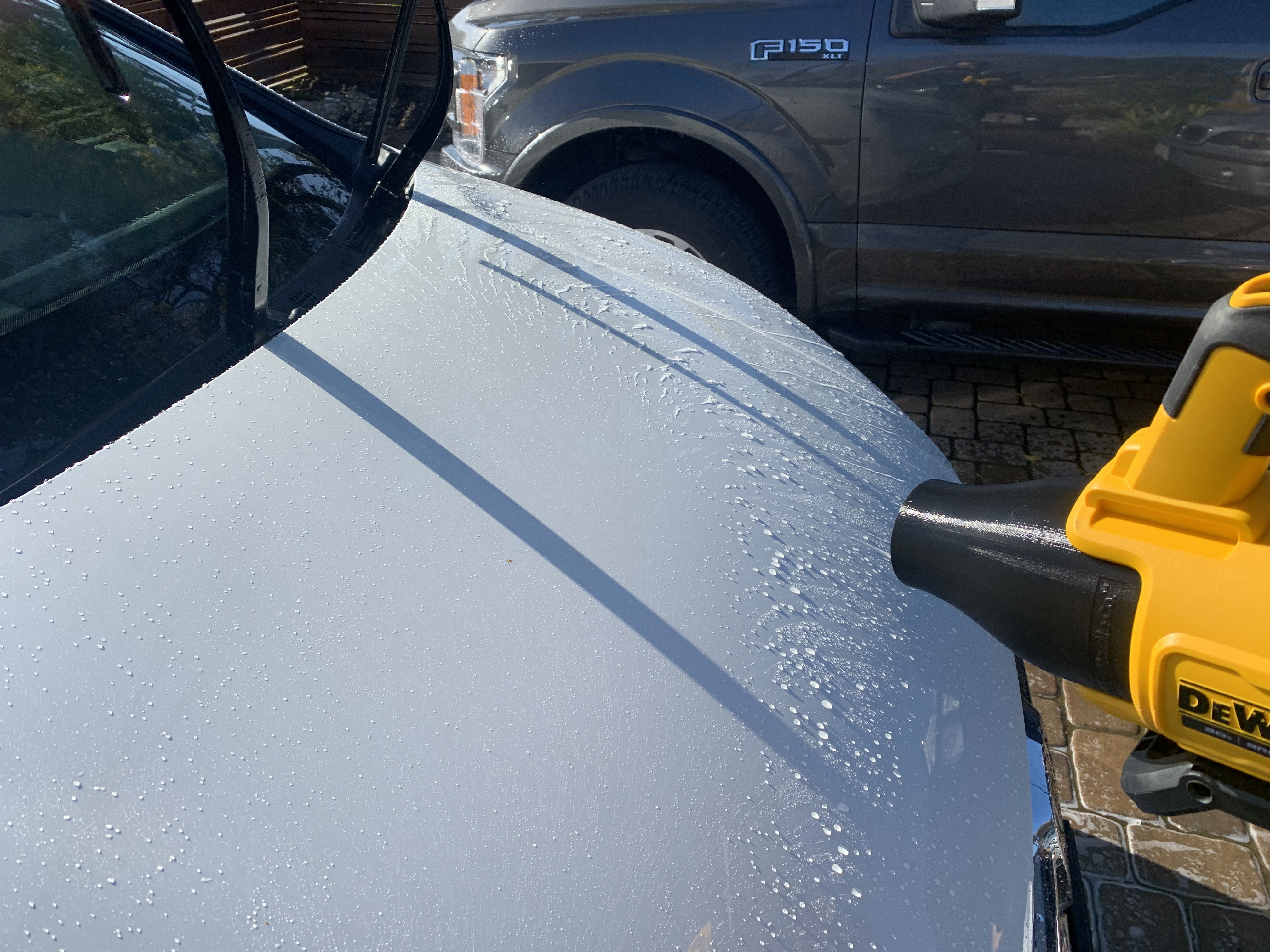
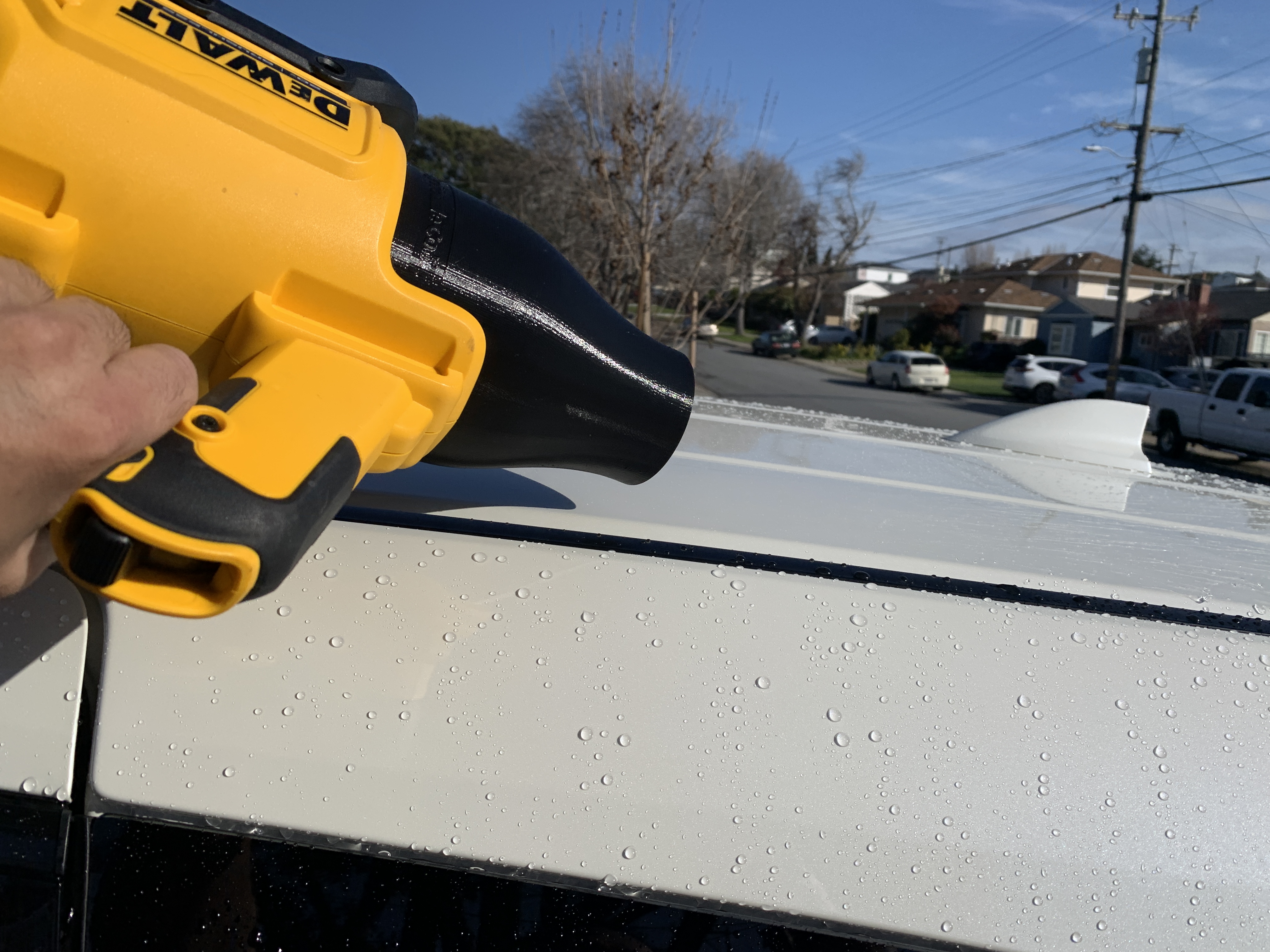
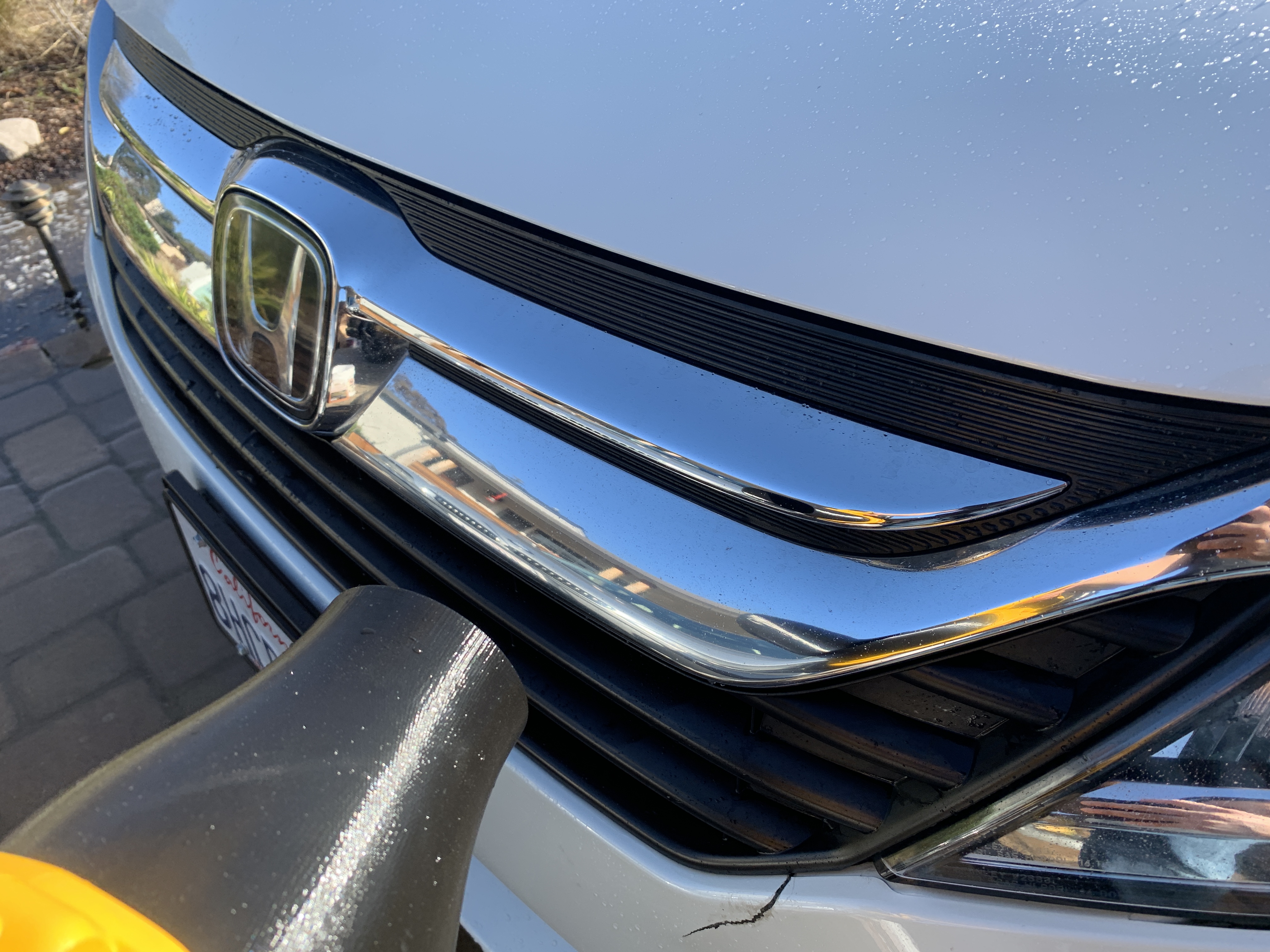
Here are a few options for battery-powered leaf blowers that work really well for blow-drying your car. You can also get stubby nozzles from the Stubby Nozzle Co. that not only provide you with a shortened nozzle, but they also have a soft tip that protects you from damaging your car in case you accidentally bump into it.
The Best Way to Dry Your Car?
If your car has a wax, paint sealant, or coating, the absolute best way to dry your car is to use a battery-powered leaf blower that has a high CFM rating to blow off the majority of the water off your car right off the bat. Also make sure to blow out all the seams and crevices (especially those areas that trap water and will eventually run down later). Then, you’ll follow up with a microfiber drying towel to dry up the residual water.
If you car is not protected with any product, then you definitely should not be using air to blow the water– it won’t blow water off the car, but simply push the water around the surface of the paint. Your only option is using a microfiber drying towel to dry off your vehicle. I highly recommend doing at least a decontamination using both an iron remover and a clay bar to remove all the contaminants in your paint, then applying a protectant like wax, paint sealant, or a ceramic coating. It’s honestly a much more enjoyable experience to wash (and especially dry) your vehicle after the car has been protected.
What Not To Dry Your Car With
I just wanted to go over a few things that I’ve tried over the years that just don’t work or aren’t worth doing. These products will either cause more scratches in your car’s paint or simply won’t work effectively enough to do the job of drying your car after washing it.
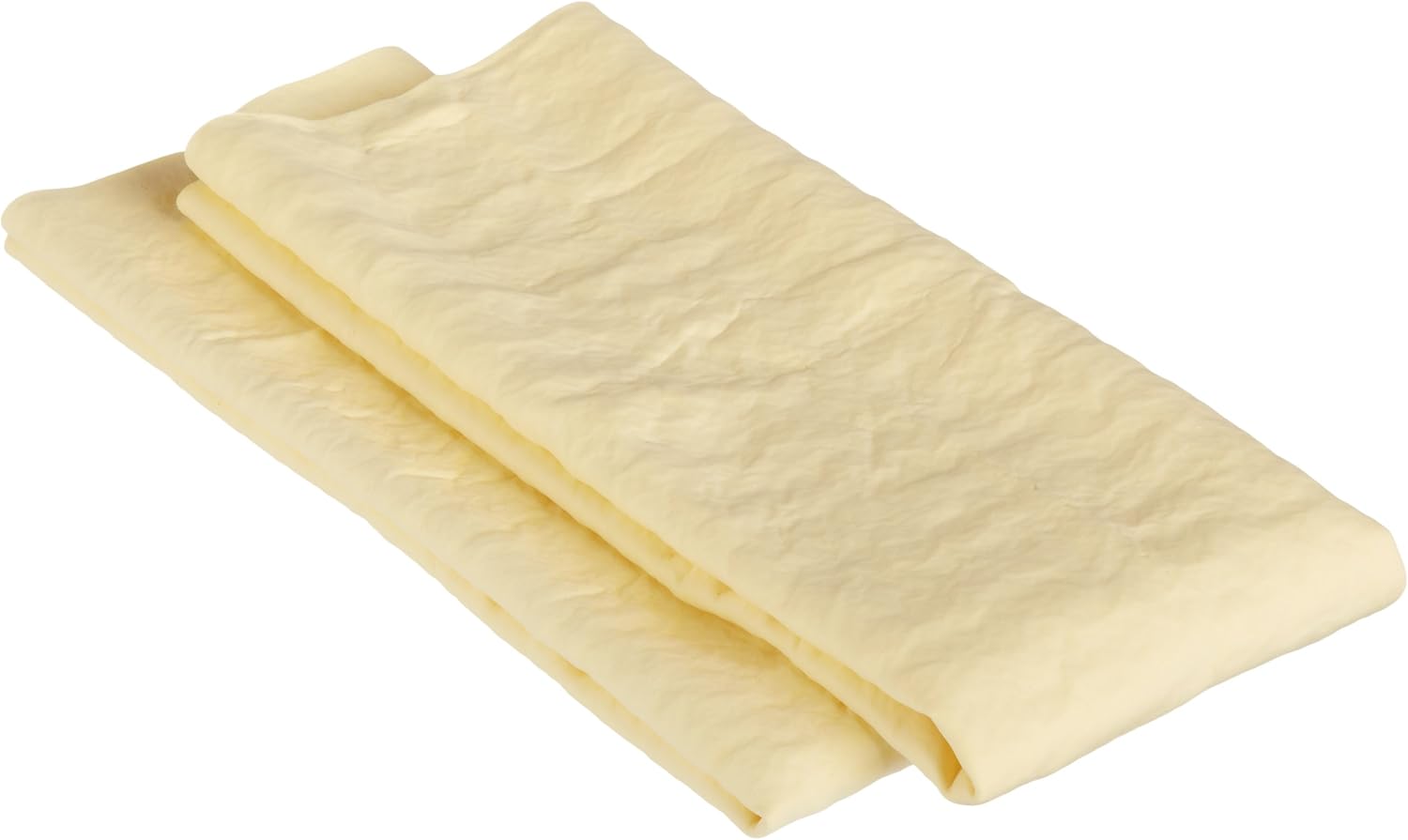
Chamois Towel
First off, is a chamois. This was popularized many decades ago and just have no place in car care. Yeah they are very absorbant, but at what cost? They easily pick up contaminants and drag it along your paint. Using this product will undoubtably introduce scratches into your car’s paint.
Handheld Blowers
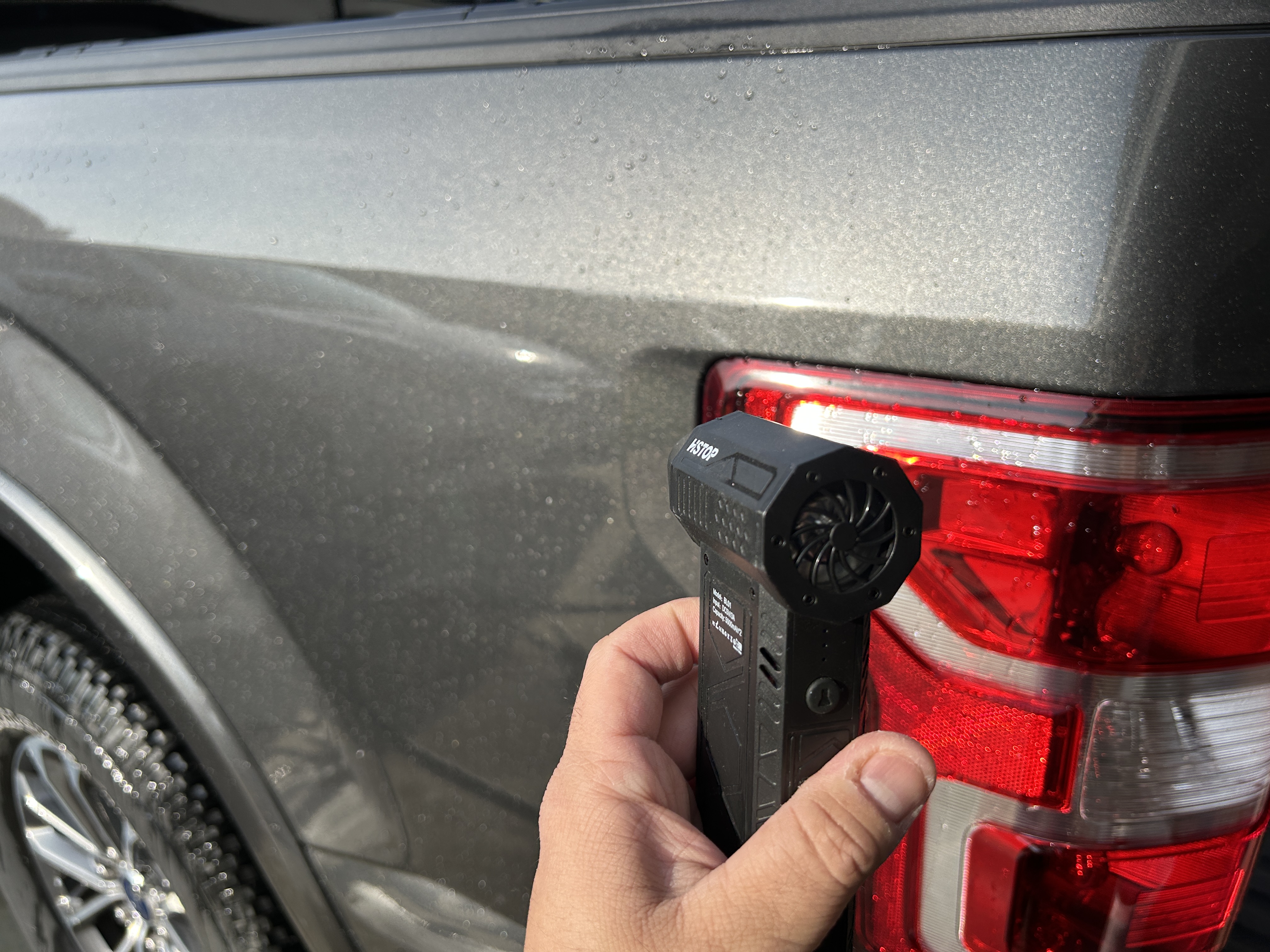
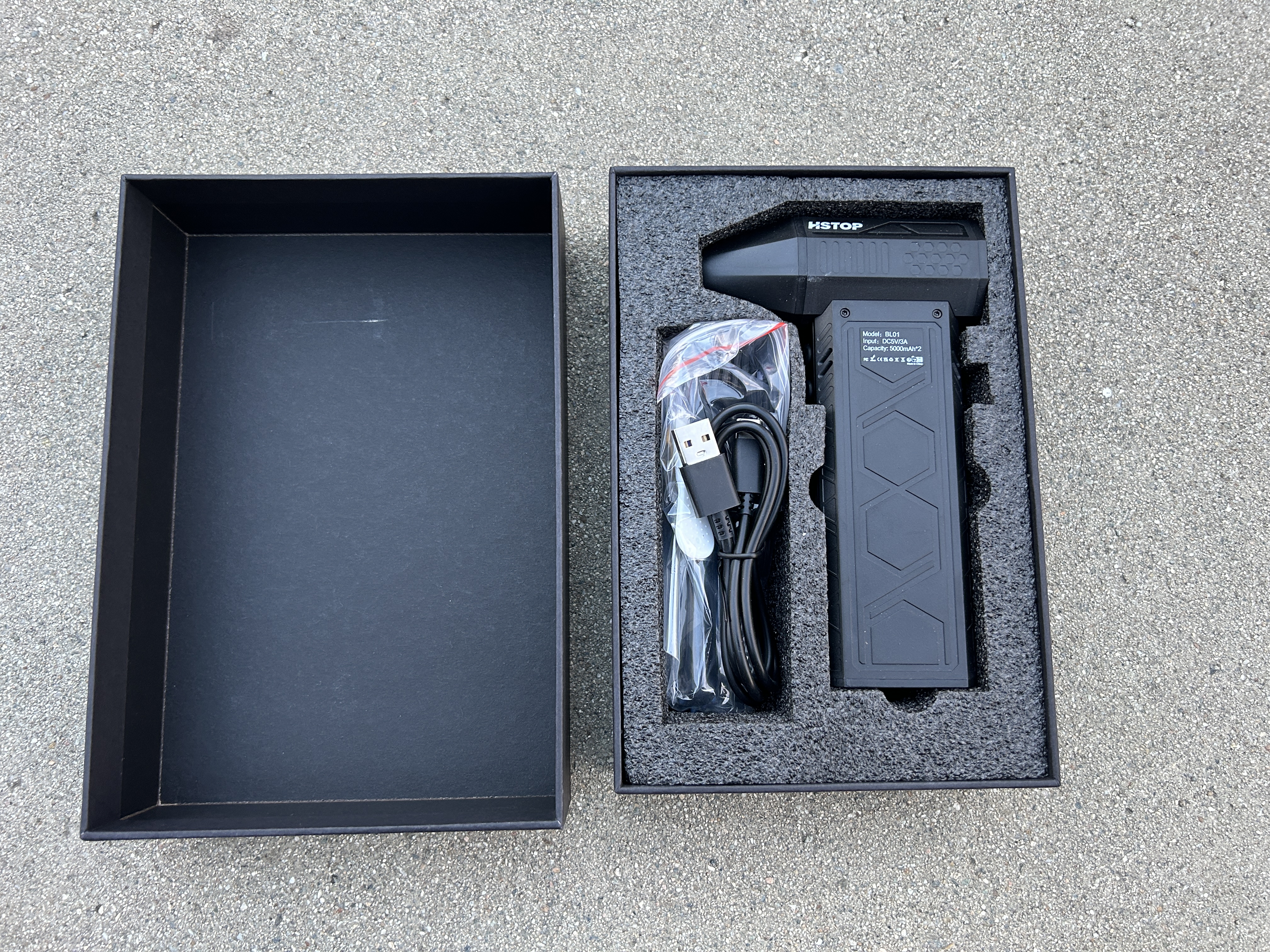
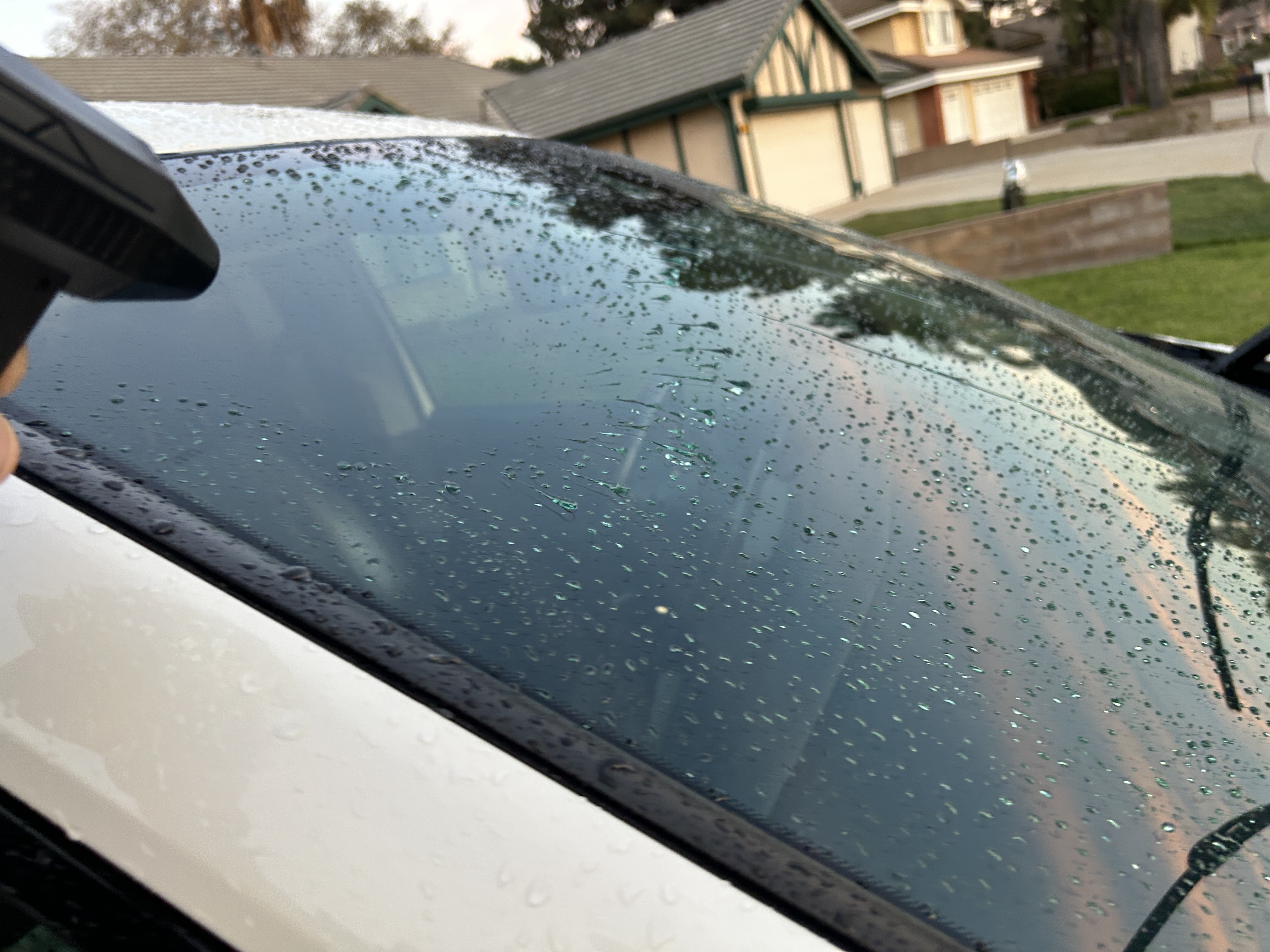
I’m not talking about leaf blowers, but those small handheld ones that you might have seen on TikTok or other social media. This looked gimmicky when I first saw it, but nonetheless I wanted to test one out. It actually does blow air decently (nowhere near the amount as a leaf blower), but fits in your hand. The worst things about this product is the near-to-nothing battery life, and that specific one literally stopped working a few weeks into using it. Other reviews of these types of handheld blowers confirmed this. Straight into the trash.
Cheaper, Low CFM Leaf Blowers
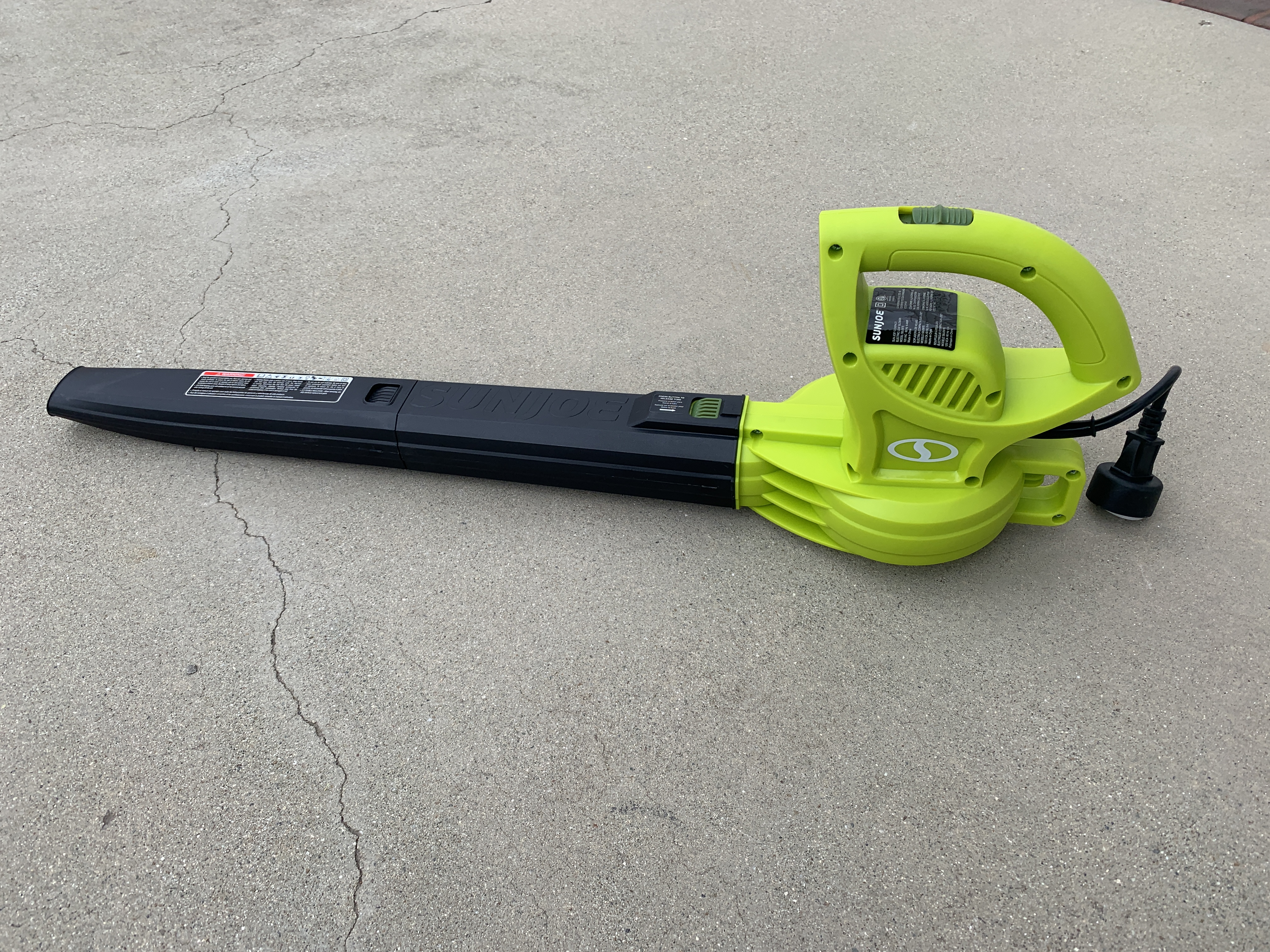
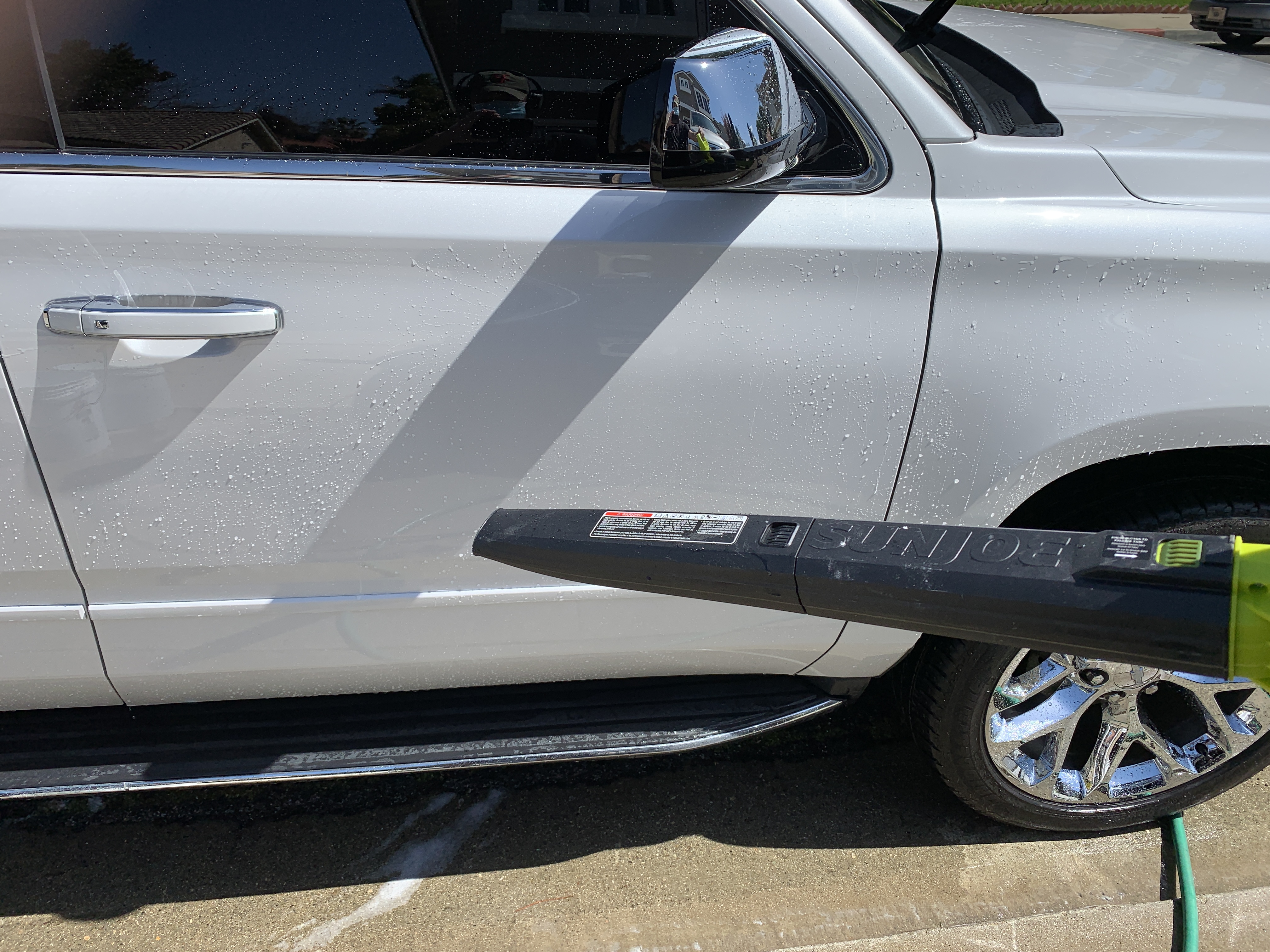
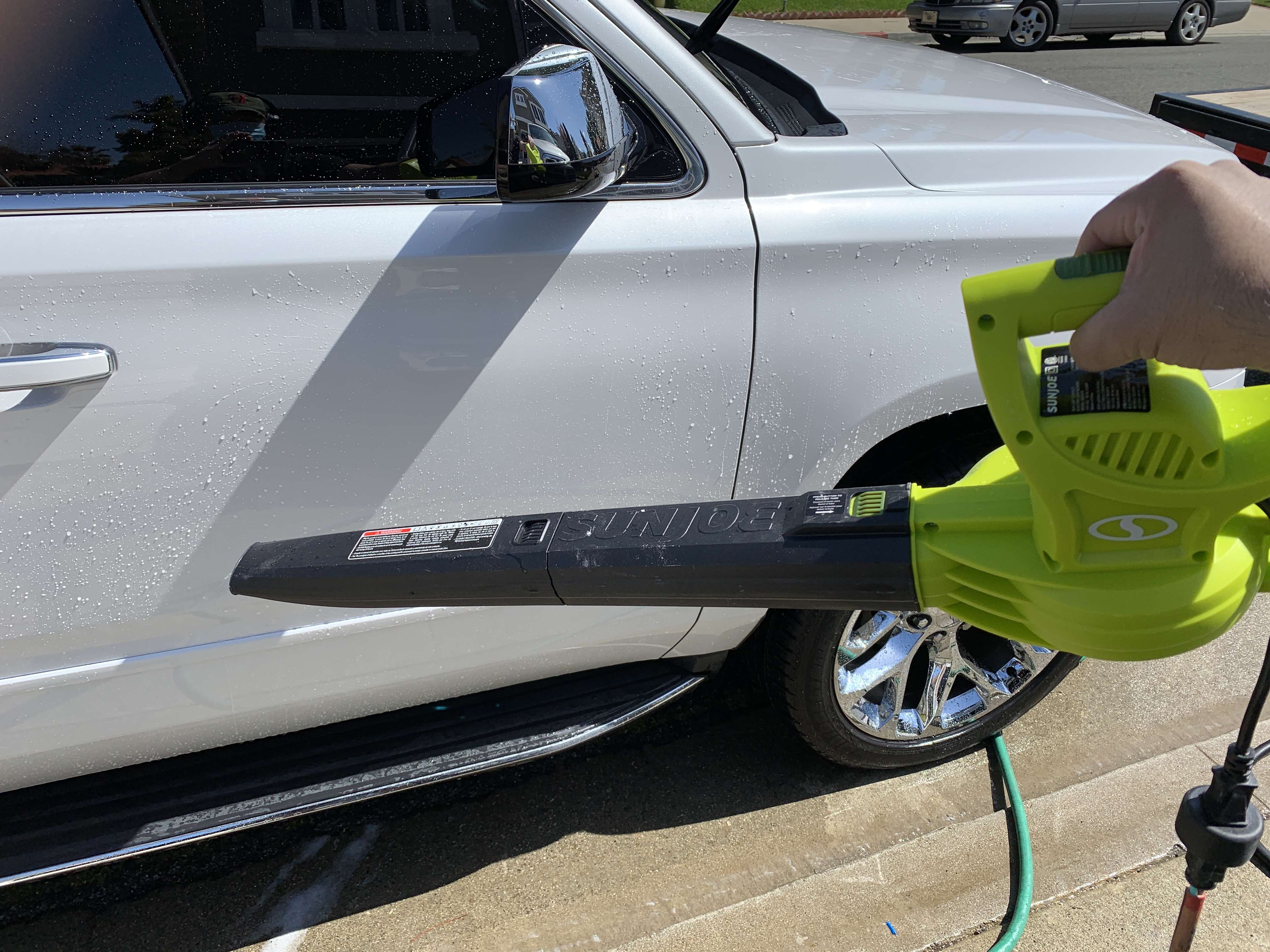
The enticing thing about these is that they’re cheap and might be attractive to those who are just getting started and looking strictly at price. These work for blowing a small amount of debris and leaves., but they just don’t have the power to adequately blow water off your car. The CFM rating is low, which is the opposite of what you’re looking for.
Air Compressors
Air compressors do blow a good amount of air but just in a smaller, narrow pattern. I think it could potentially work if used in a shop where the compressed air is readily available and is used regularly. However, for most people doing it at home, it’s probably more trouble to set up than it’s worth doing. And finally, I’ve found that I will sometimes get some residue from inside the compressor tank coming out of the air gun, so that is not ideal either.
Wrap Up on Drying Your Car After a Car Wash
I hope this was helpful in helping you determind the best way to dry your car after washing it. Based on my experience over the years trying out all kinds of different drying products, I’ve come to these conclusions. I highly recommend detailing your car and applying some kind of protection (even a wax), as it will make harder for contaminants to stick to your car and make it a hell-of-a-lot easier to wash and dry when it’s time to wash your car again.