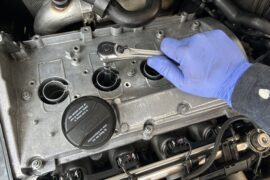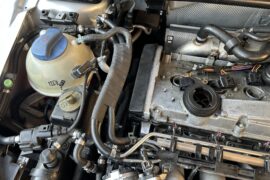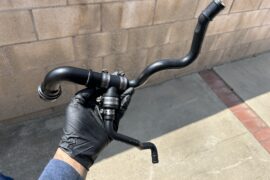
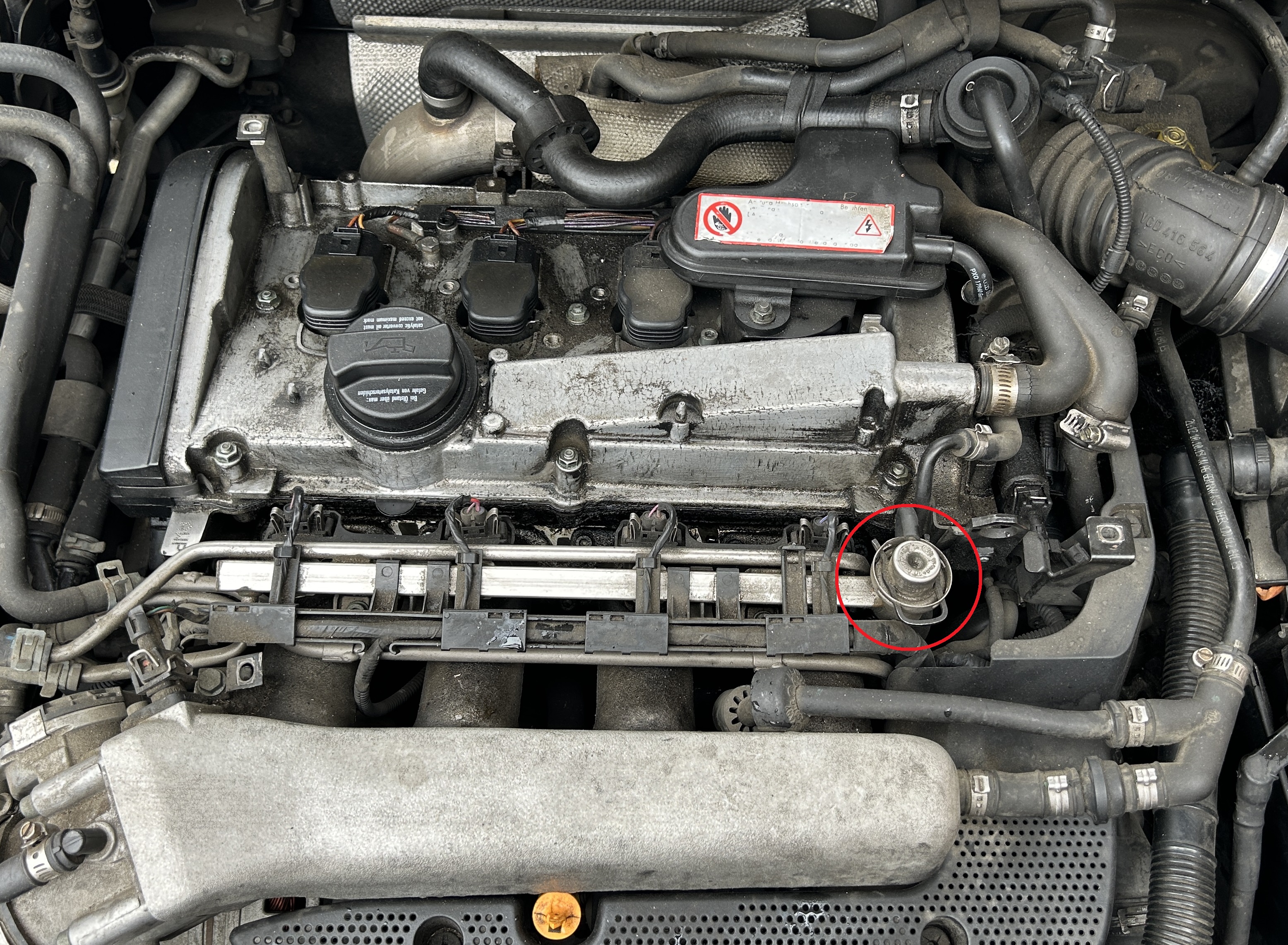
One of the problems with working on an older car is that every time you touch something, something else always seems to break. My 2002 Audi TT is no exception. While doing the many maintenance items on my car, I accidentally bumped into the fuel pressure regulator (circled below in red). As a result, it started leaking fuel whenever the car was running.
The smell of the leaking fuel is pretty strong, so even a small leak is noticeable. The fuel pressure regulator has an O-ring that just like any other rubber parts on the car, can break down over time. Add in the fact that it’s constantly exposed to heat and fuel, it tends to get hard and will no longer make a good seal. With the rubber O-ring not able to make a good seal, the fuel pressure regulator, under pressure allows the fuel to seep out.
Since I was already removing the fuel pressure regulator to get access to the O-ring, I decided to replace the whole unit since it’s not expensive to replace. The fuel pressure regulator is a part that can be found easily as an aftermarket part. The fuel pressure regulator comes with the O-rings already pre-installed, so it addressed my O-ring issue as well when I replaced the whole thing.
Parts & Tools Needed
The fuel pressure regulator has an OEM part number of 037133035C, and is a part that is used across many different Audi and Volkswagen platforms. It can easily be found as an aftermarket part. A more well-known brand may cost at least $25, a genuine OEM one will be extremely expensive, but an aftermarket one is pretty affordable at around $10-$15. I went with the cheaper aftermarket unit and it has worked perfectly well for me.
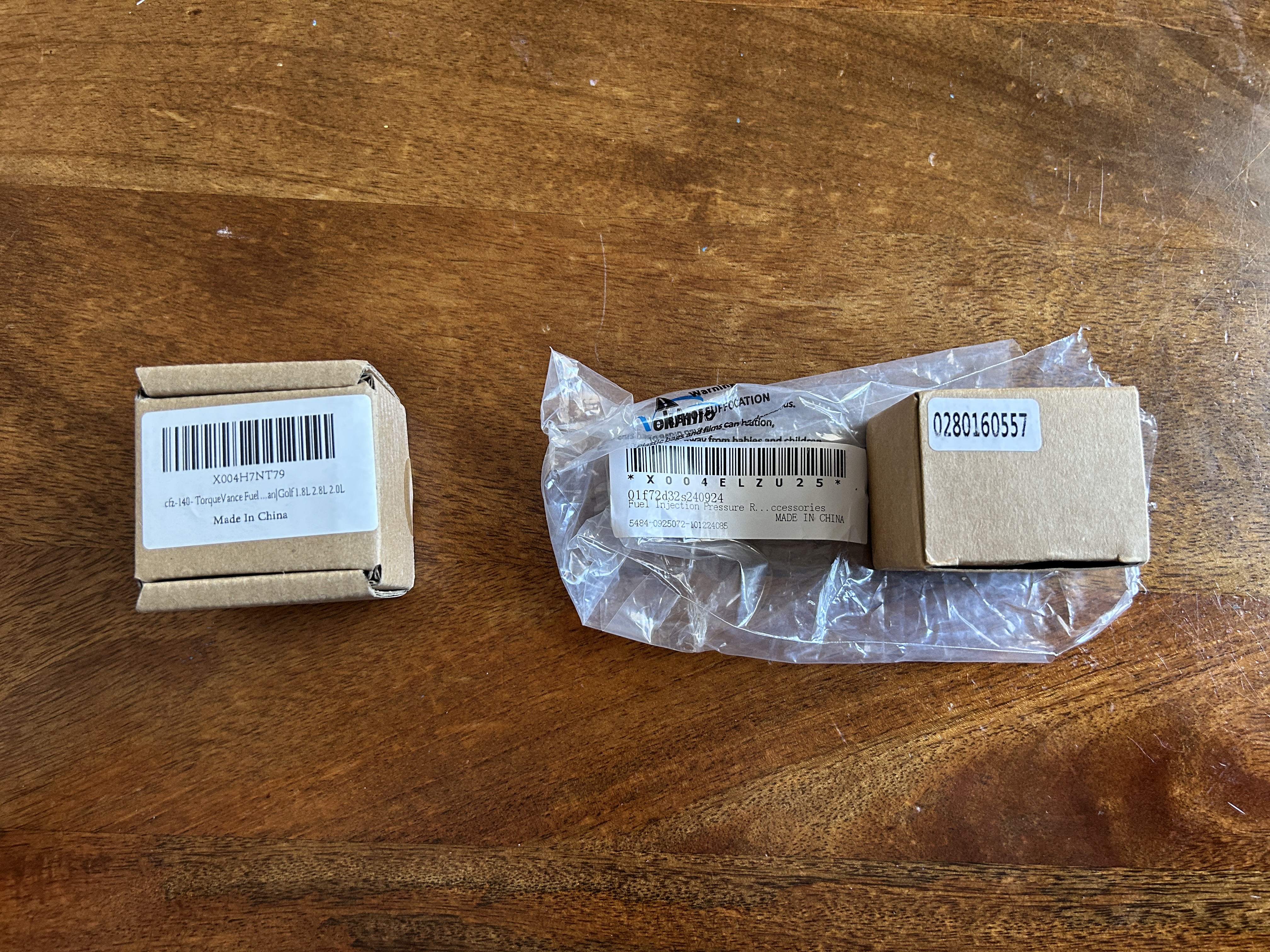
Fuel Injector Pressure Regulator: TorqueVance / VekAuto
Changing Out the Fuel Injection Pressure Regulator
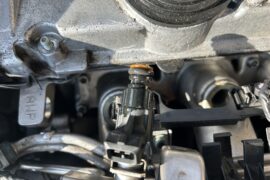
Removing the fuel pressure regulator is very easy. Have some shop towels or rags to catch any leaking fuel when you remove it. Use a flat head screwdriver to pry the retaining clip off, which will allow the fuel pressure regulator to pop off. Make sure the hose that is attached to it is off before pulling the whole unit out. If the O-ring is still sitting inside the opening, take that out as well.
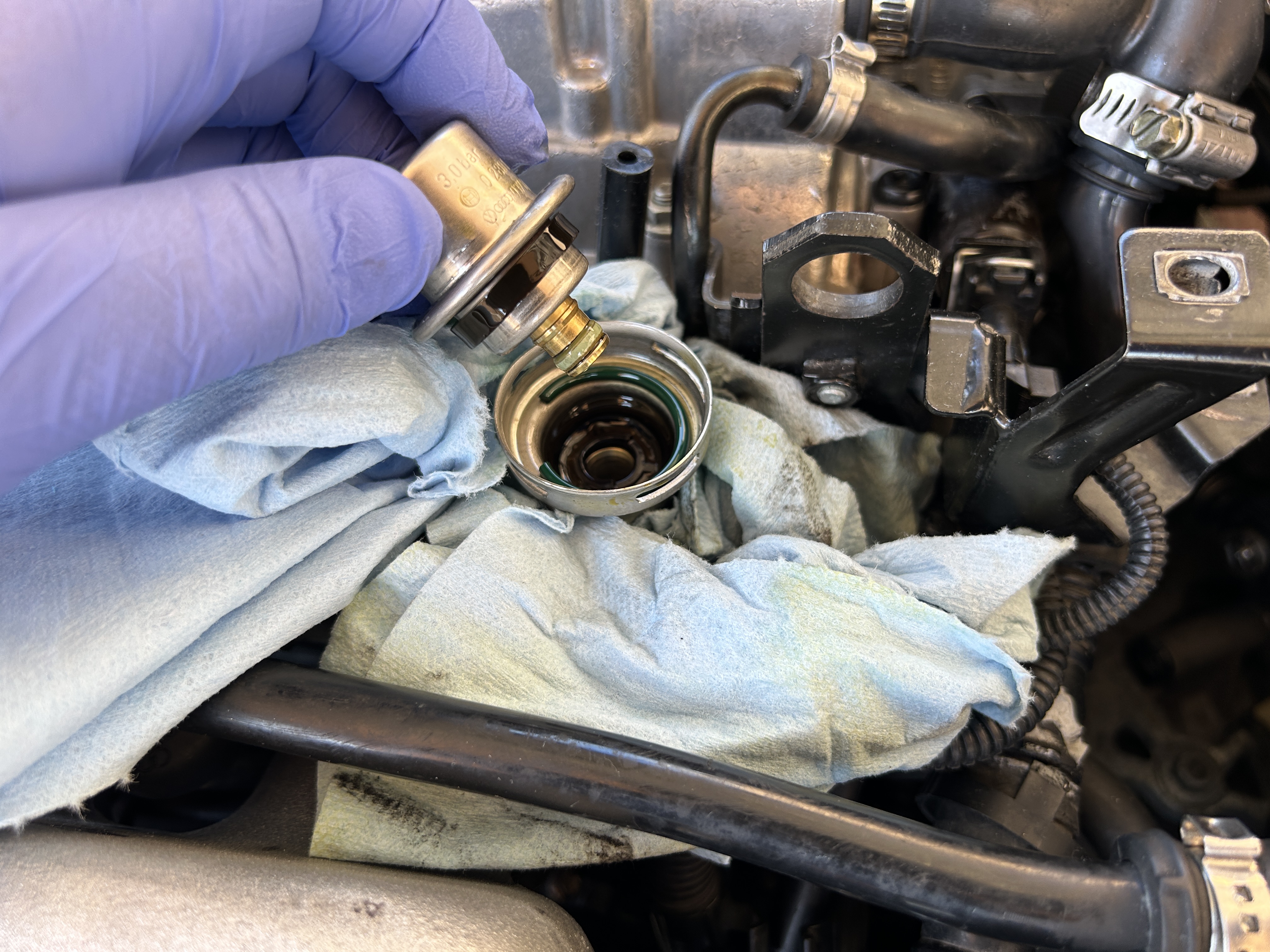
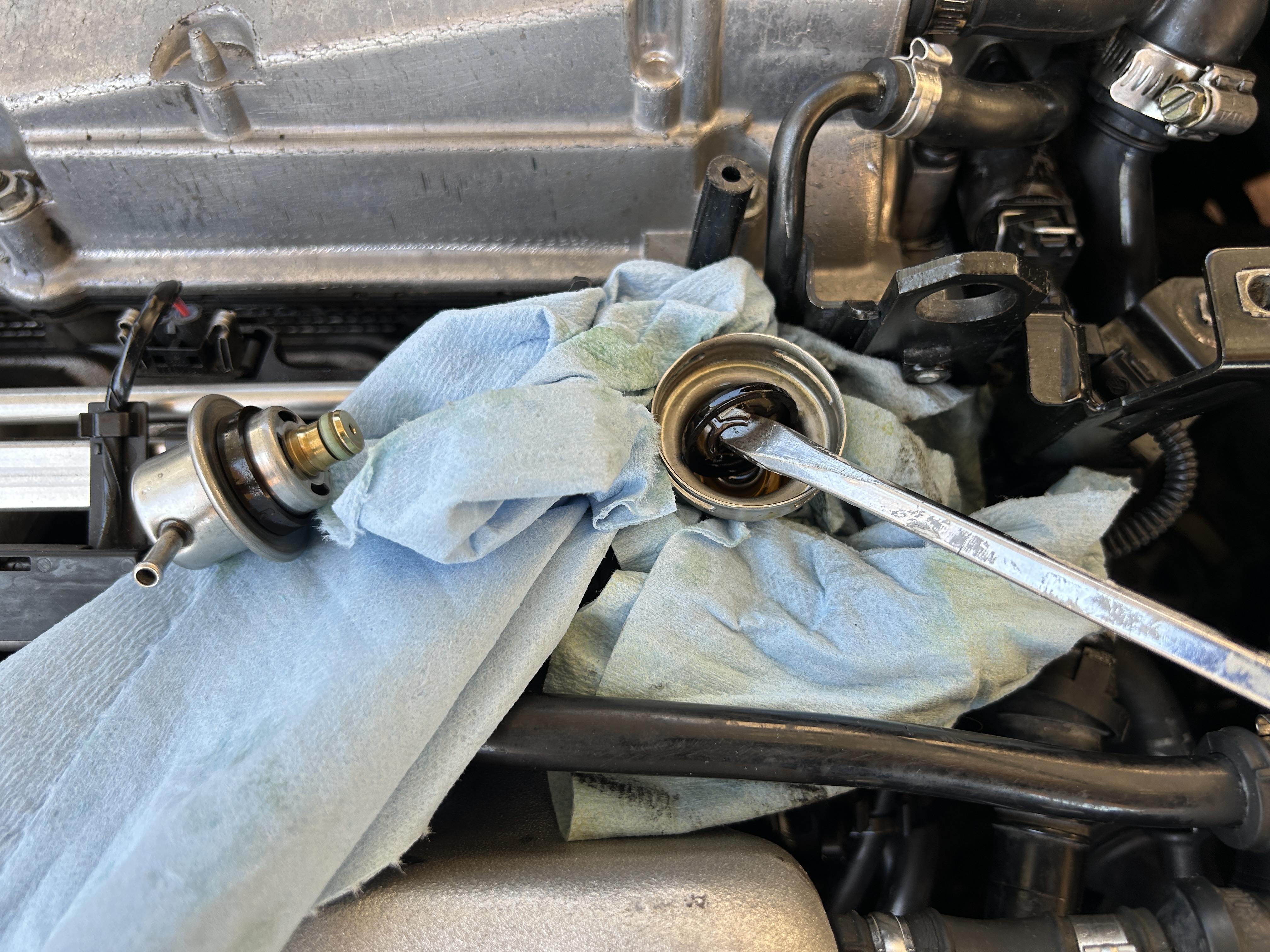
As you can see below, the O-ring of my fuel pressure regulator was cracked, which is the reason why it was leaking fuel.
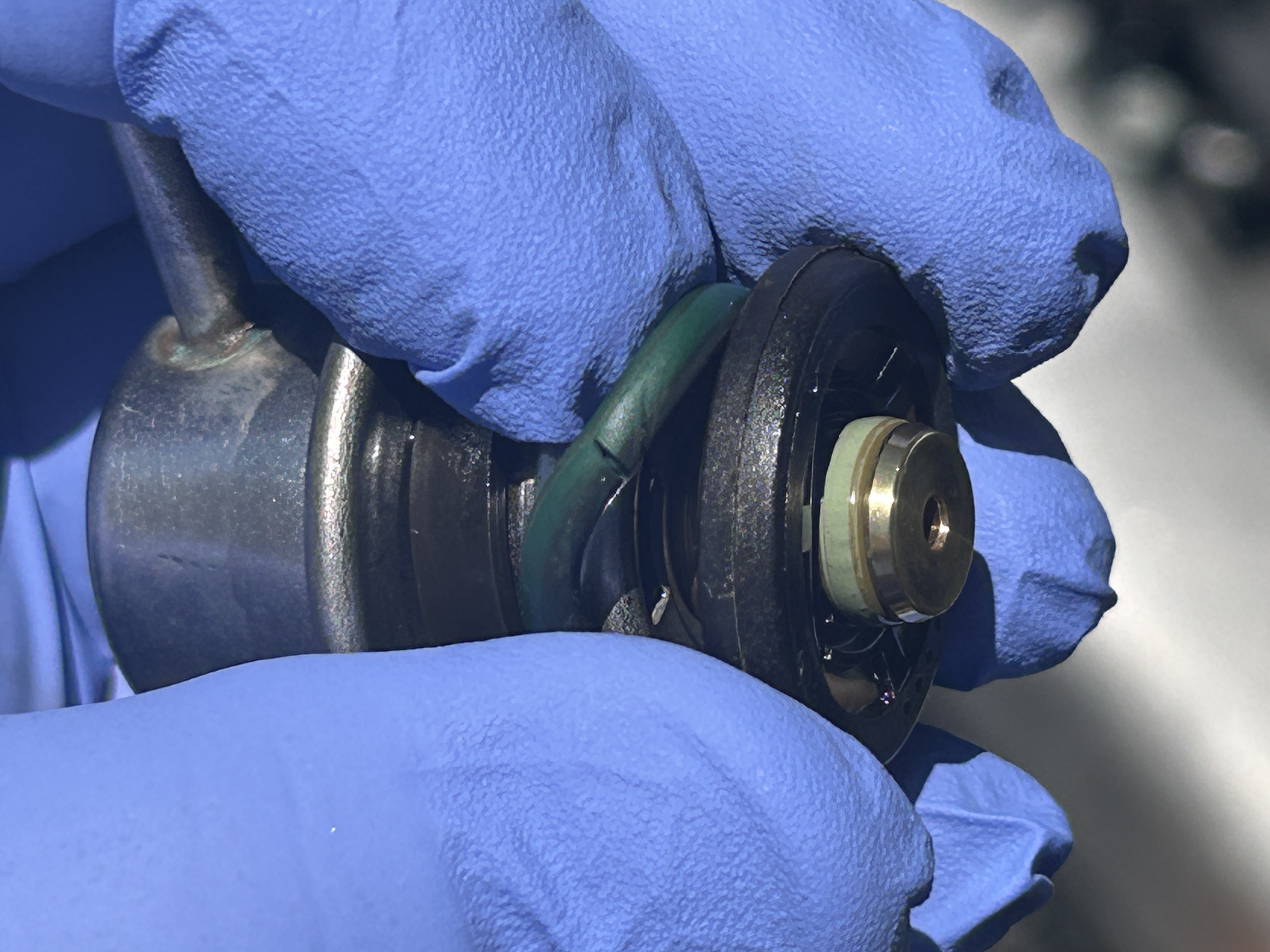
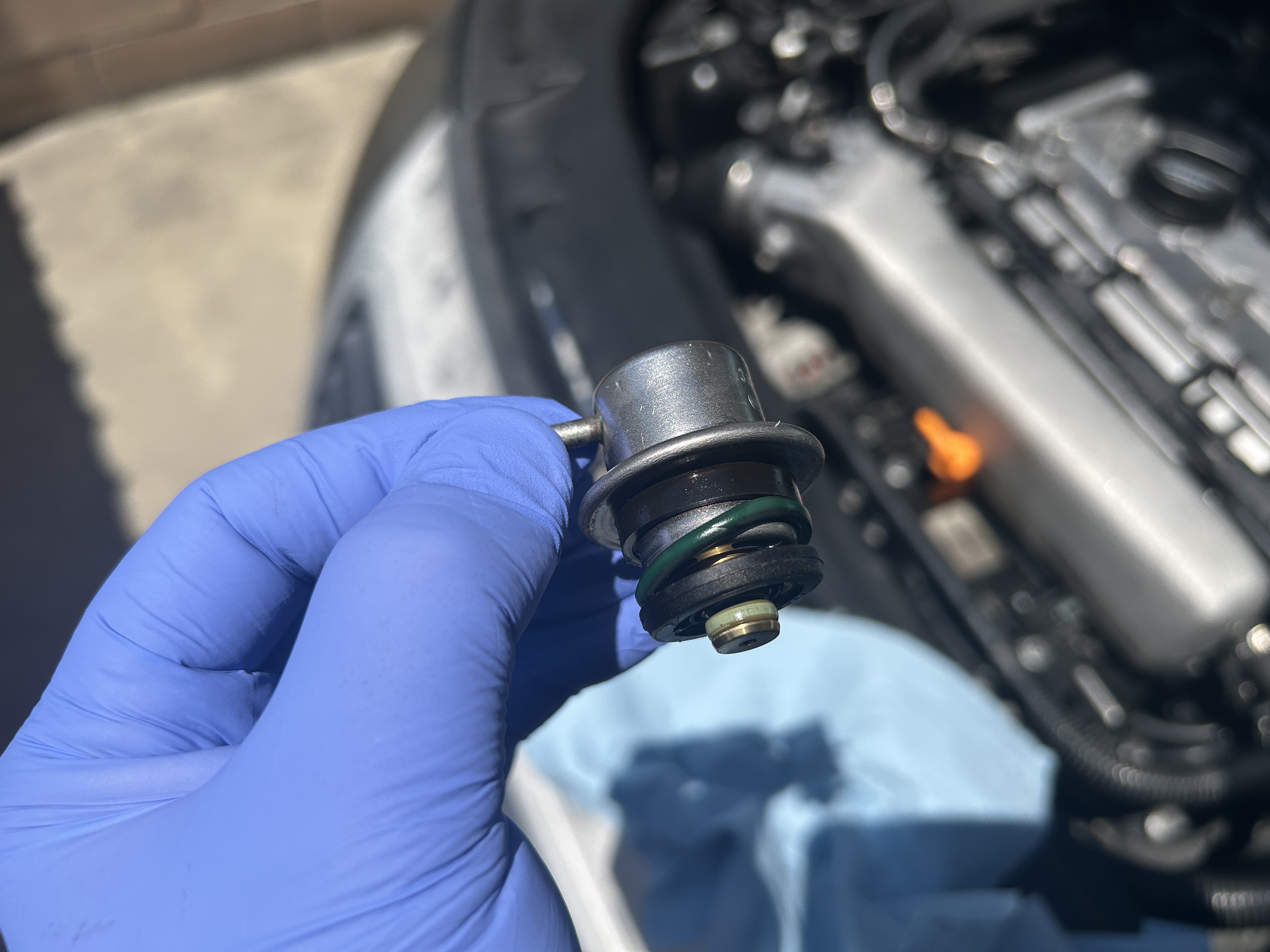
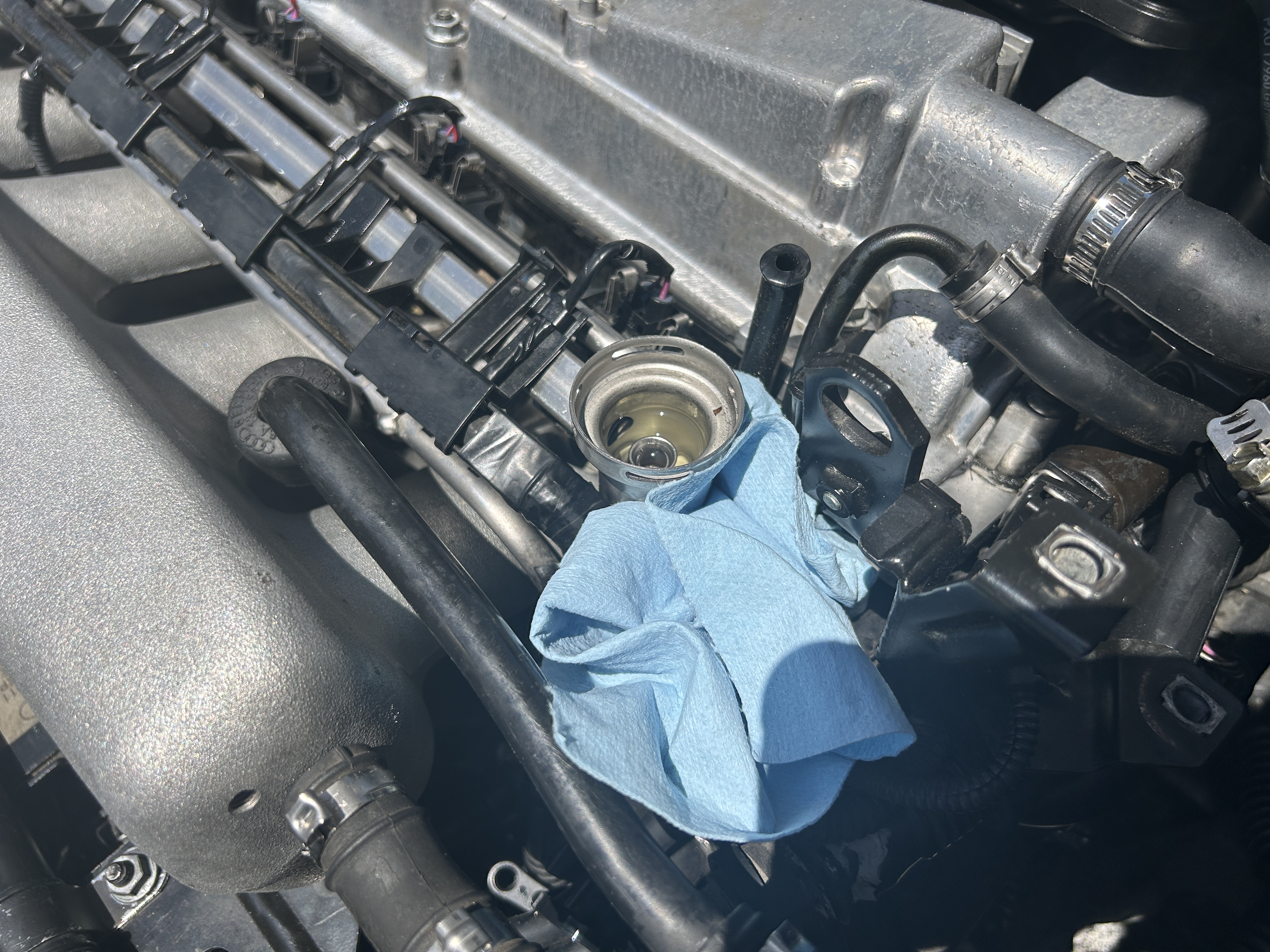
I purchased two different aftermarket fuel injection pressure regulators online and they were identical. Based on my experience, these aftermarket parts seem to not only be identical, but work perfectly fine as well.
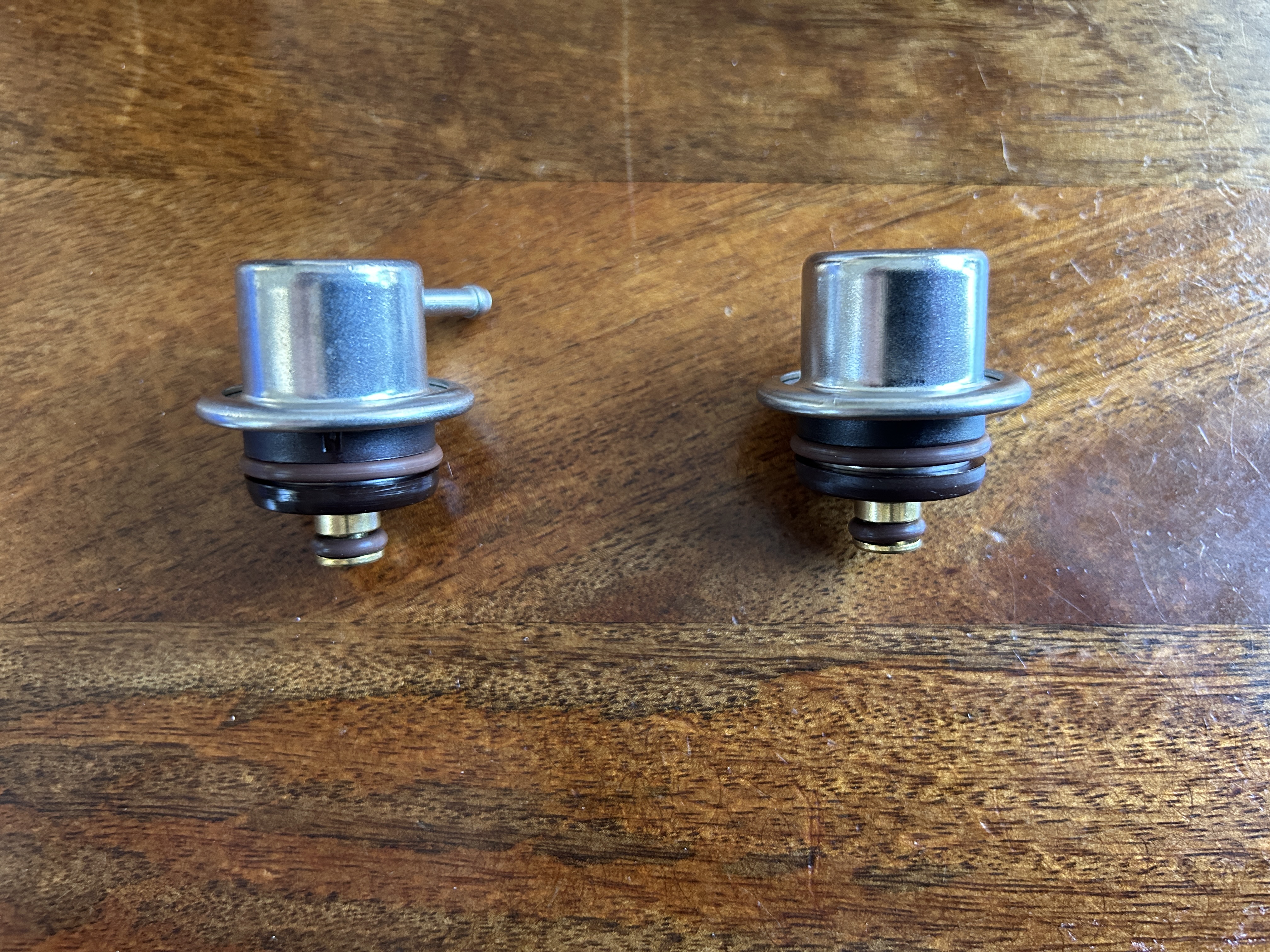
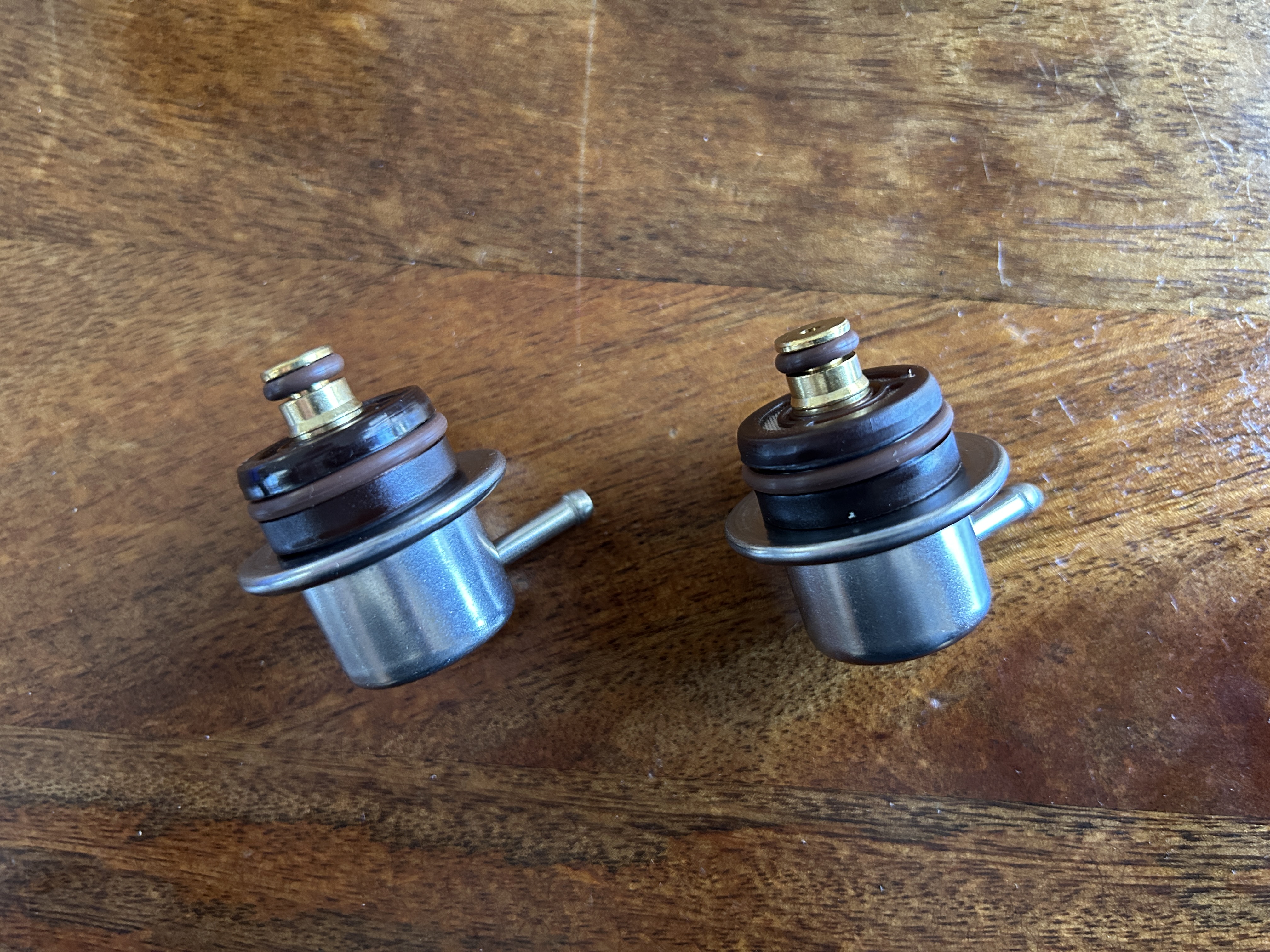
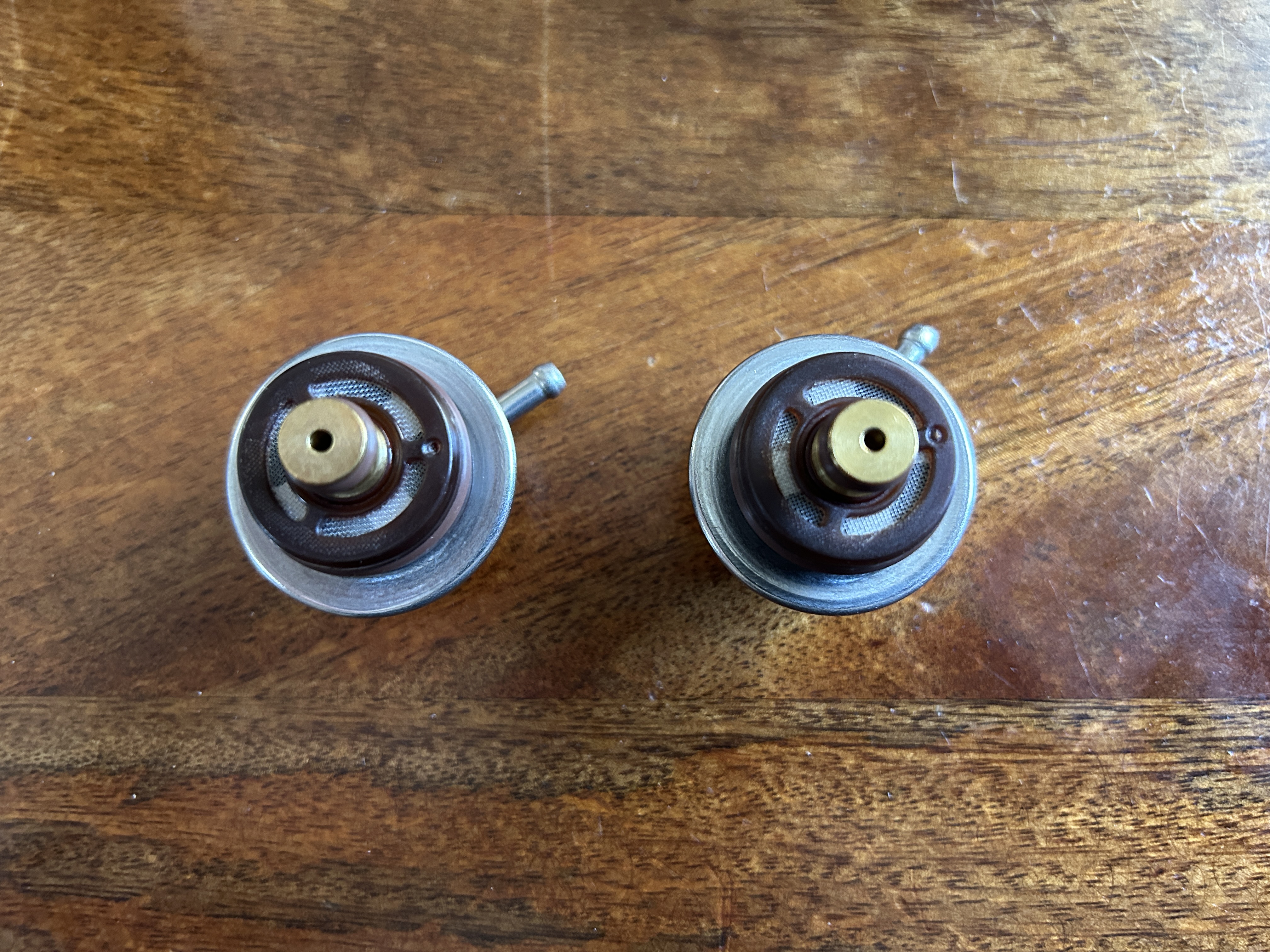
Installing the new fuel injection pressure regulator is as simple as pressing the new unit in and then sliding in the retaining clip so that it holds down firm. Make sure that the regulator is fully pressed into the housing before inserting the retaining clip.

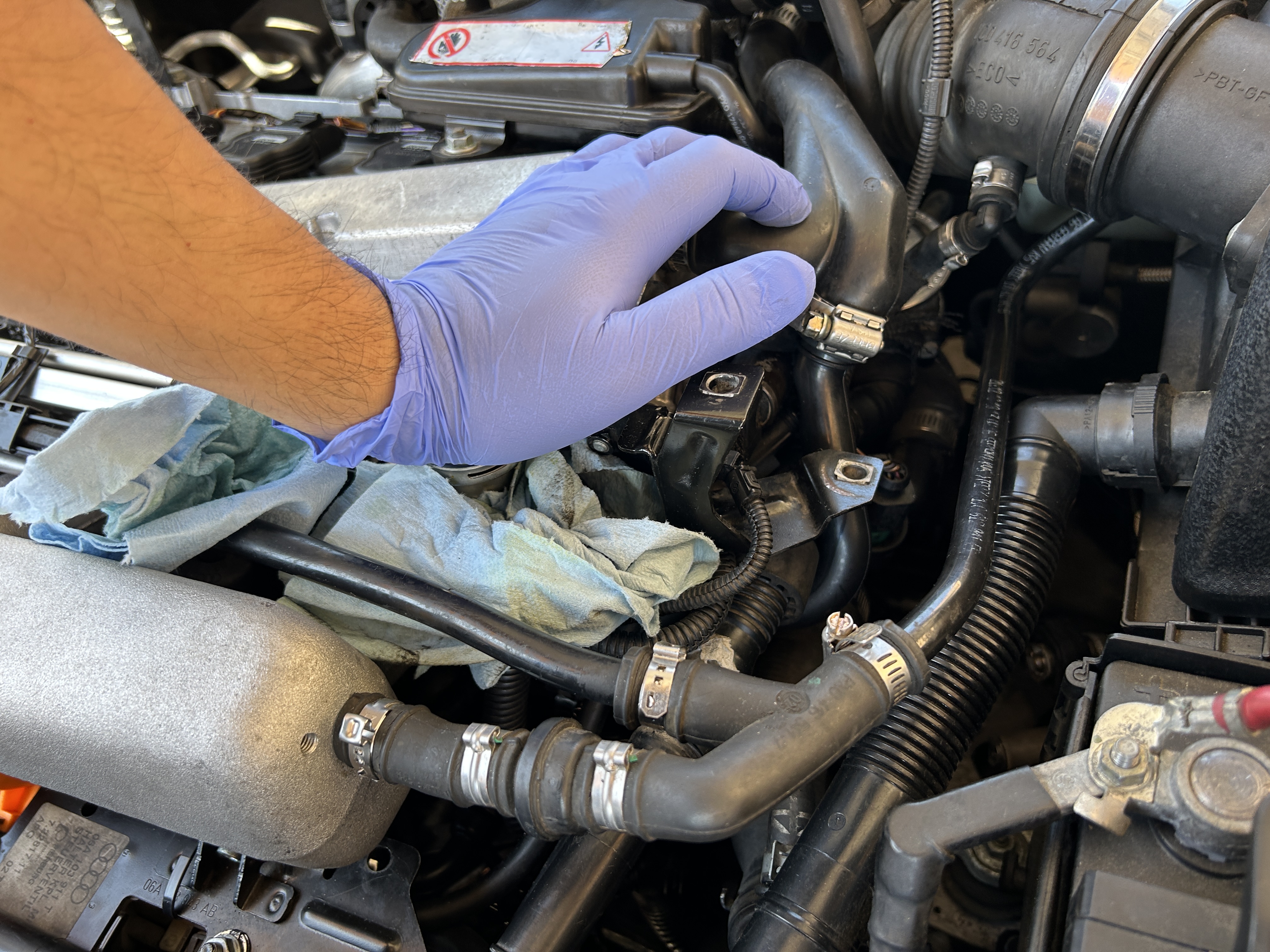
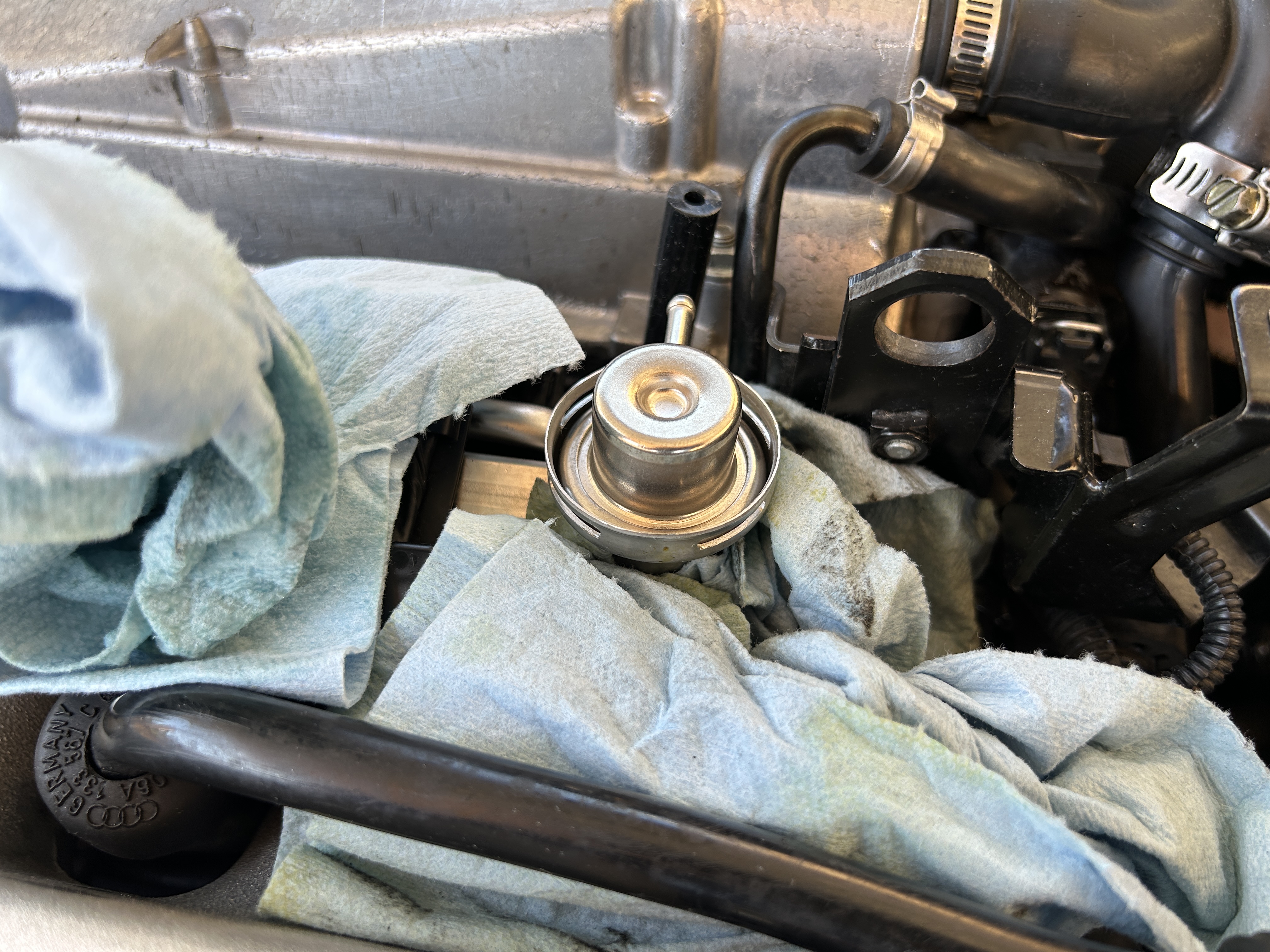
If you cannot press in the retaining clip through to hold the unit down, the fuel pressure regulator may not be fully seated. It may take a bit of adjustment to get it to fully press down completely to allow for the clip to slide all the way through.
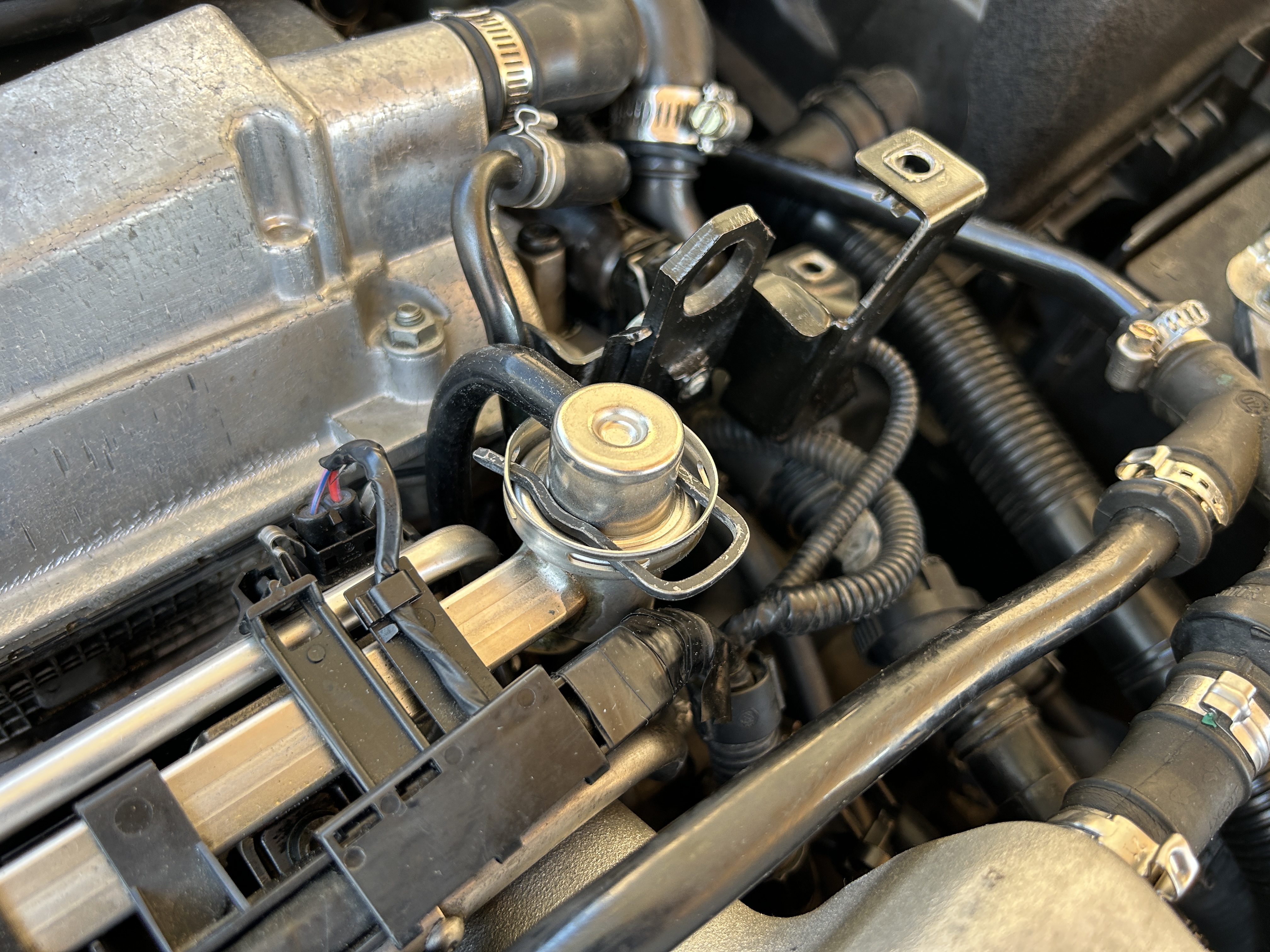
Once the fuel injection pressure regulator is installed, replace the hose that goes into the nipple. Turn on and run your vehicle to ensure there are no longer any fuel leaks. Replacing my fuel injection pressure regulator fixed my fuel leak issue as the O-ring was replaced with a new one.